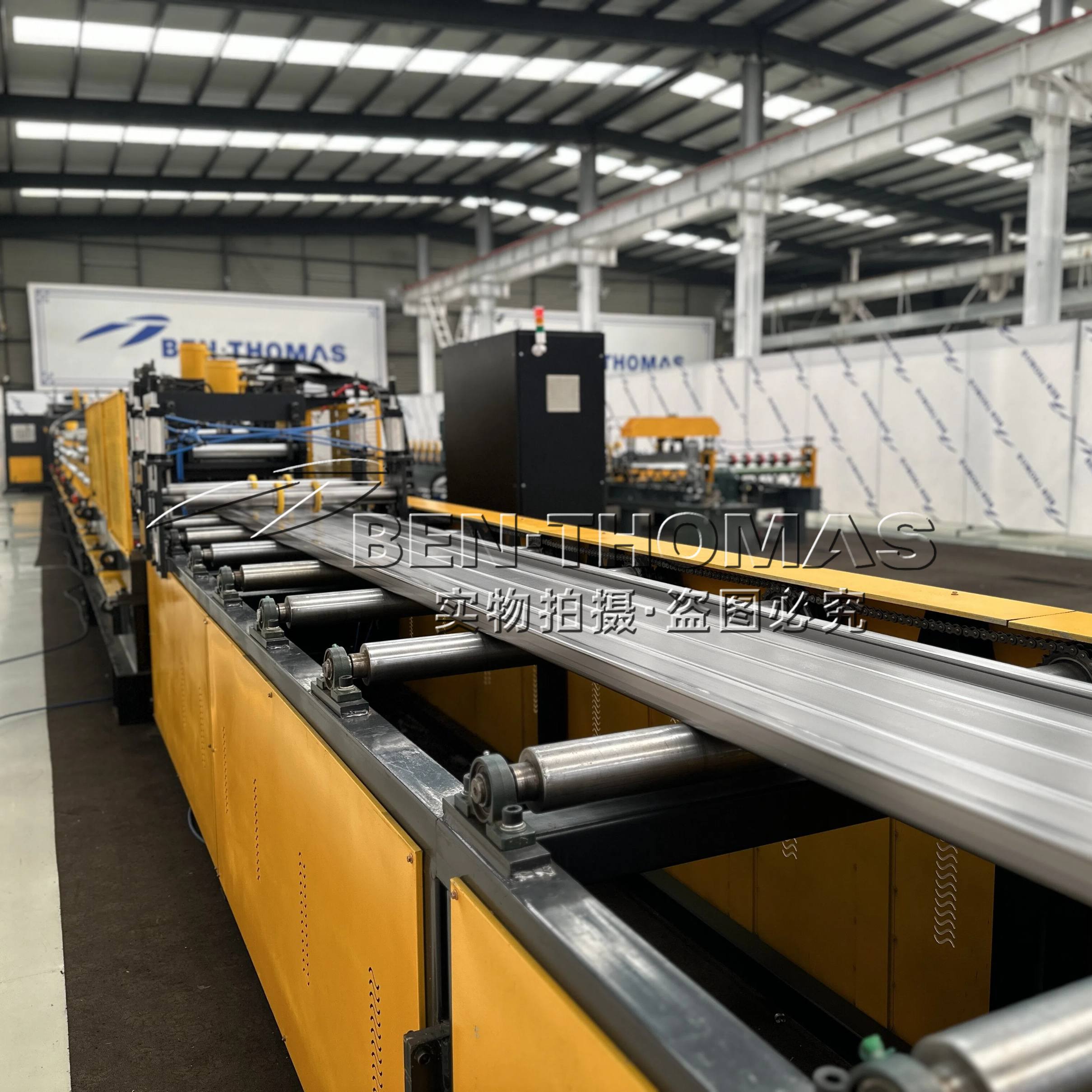
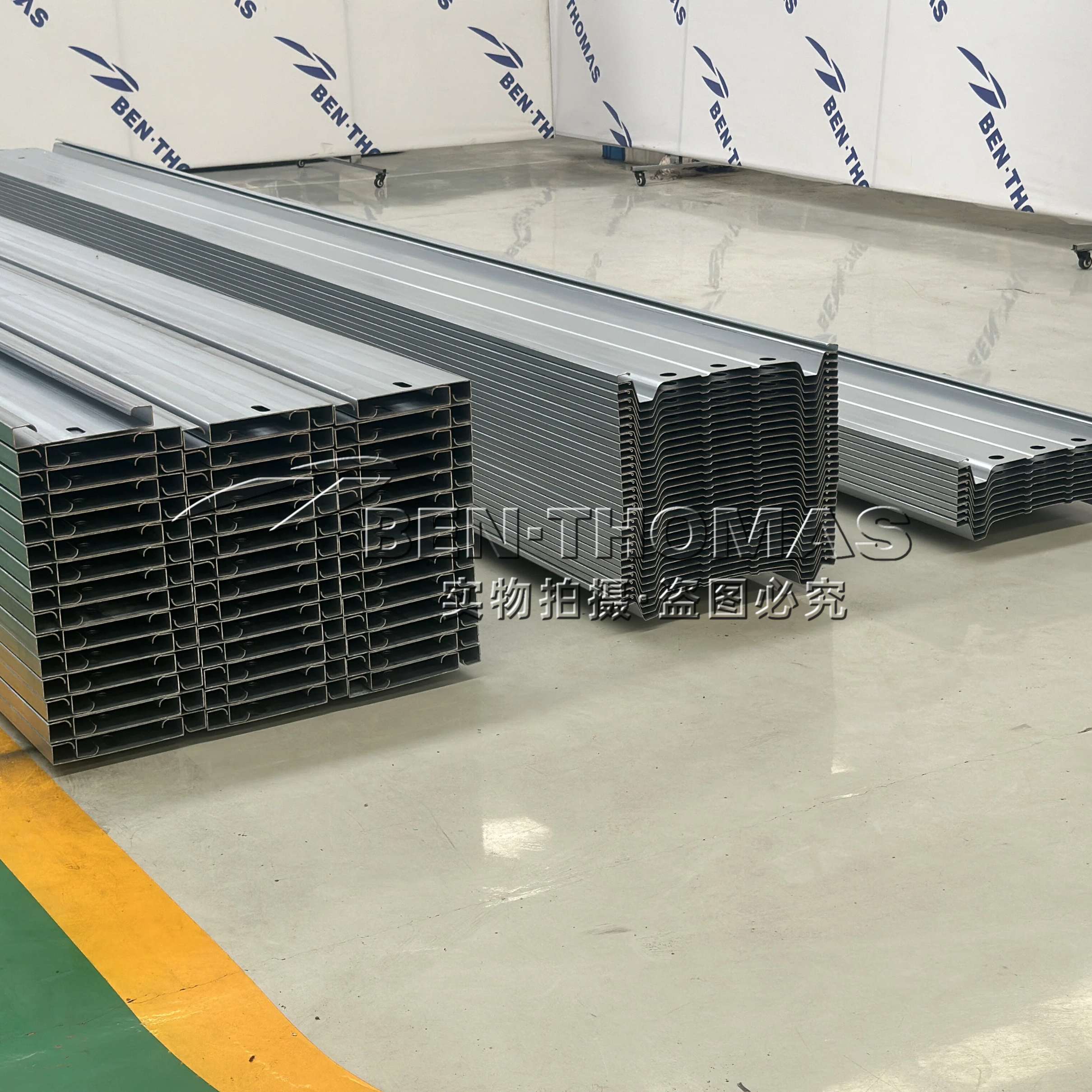
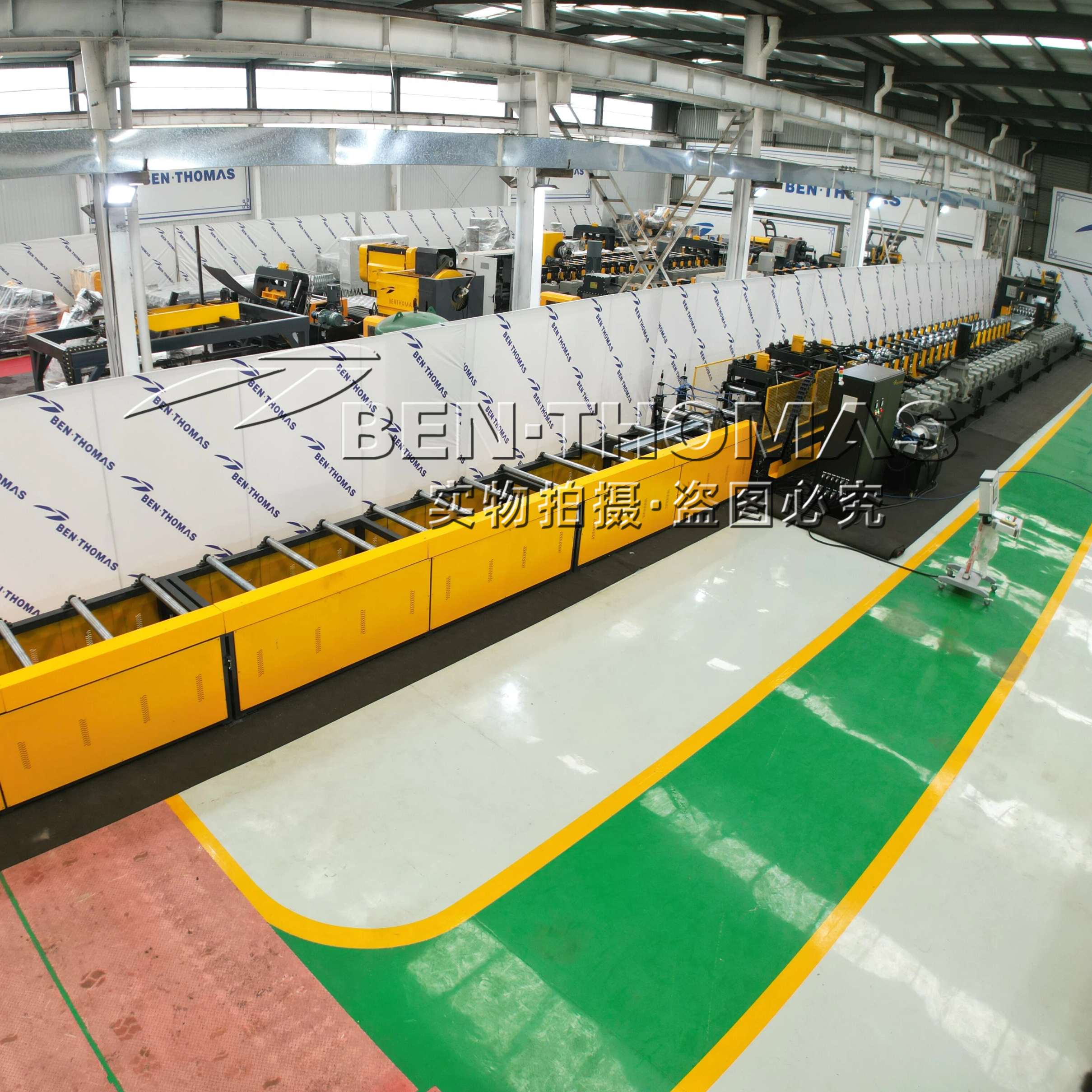
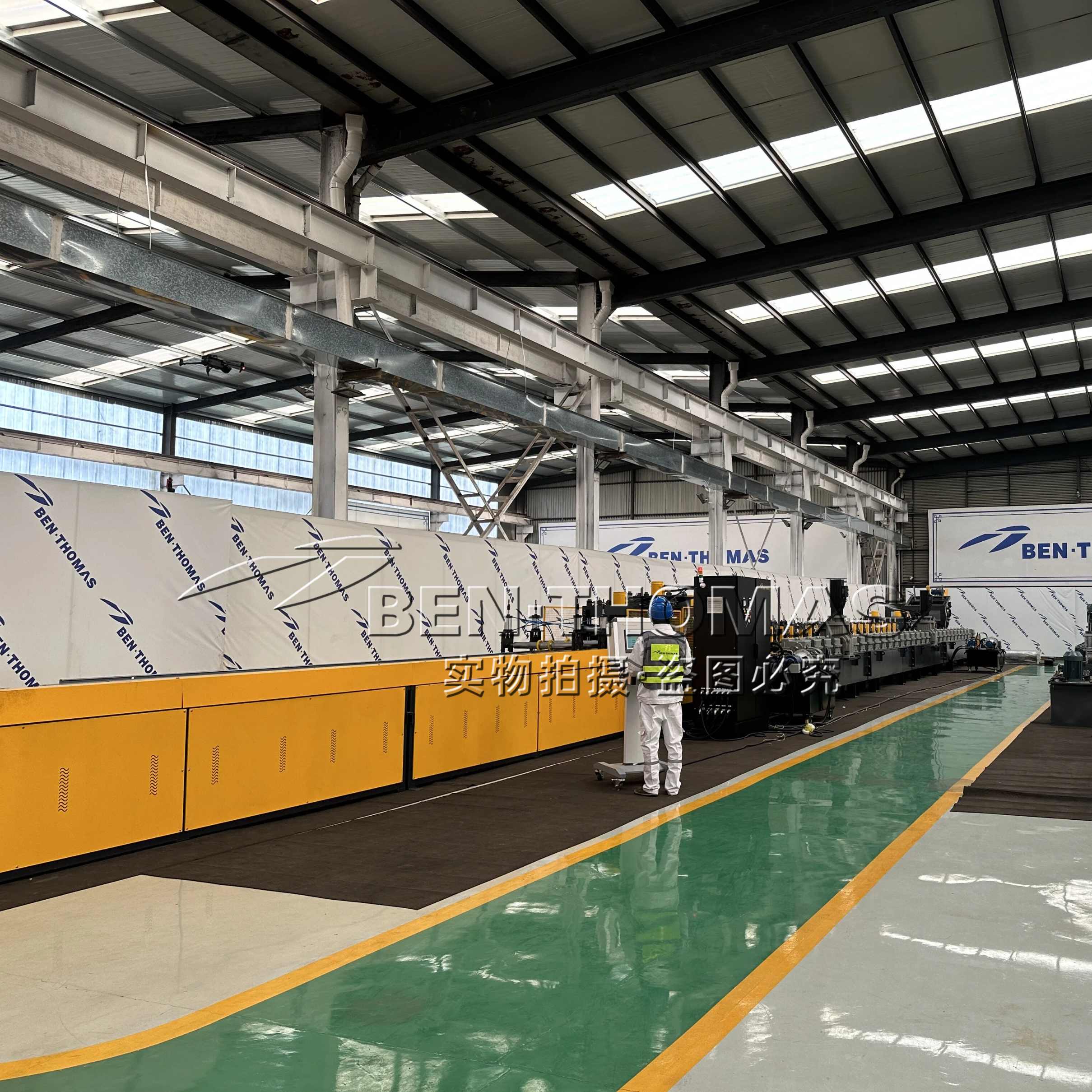
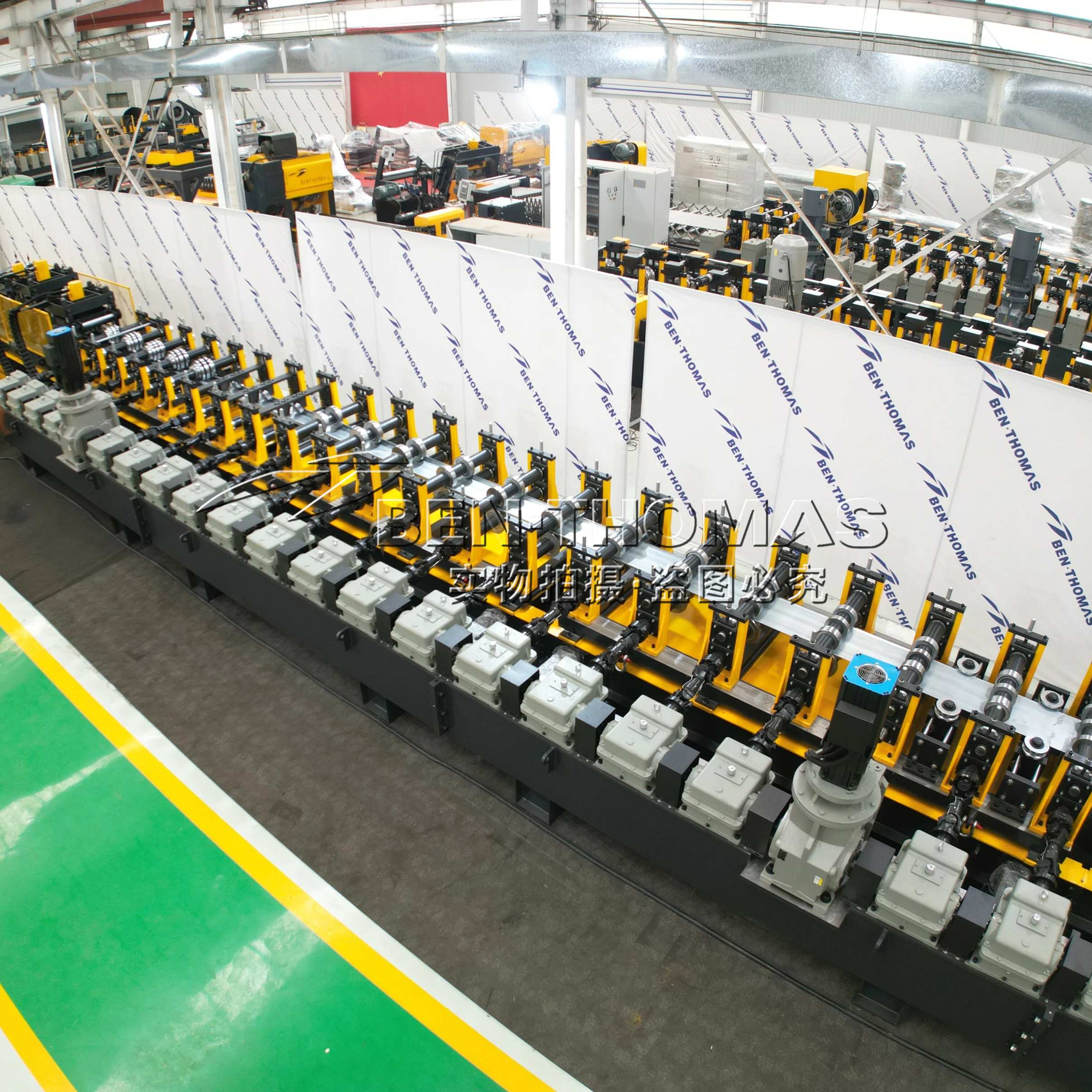
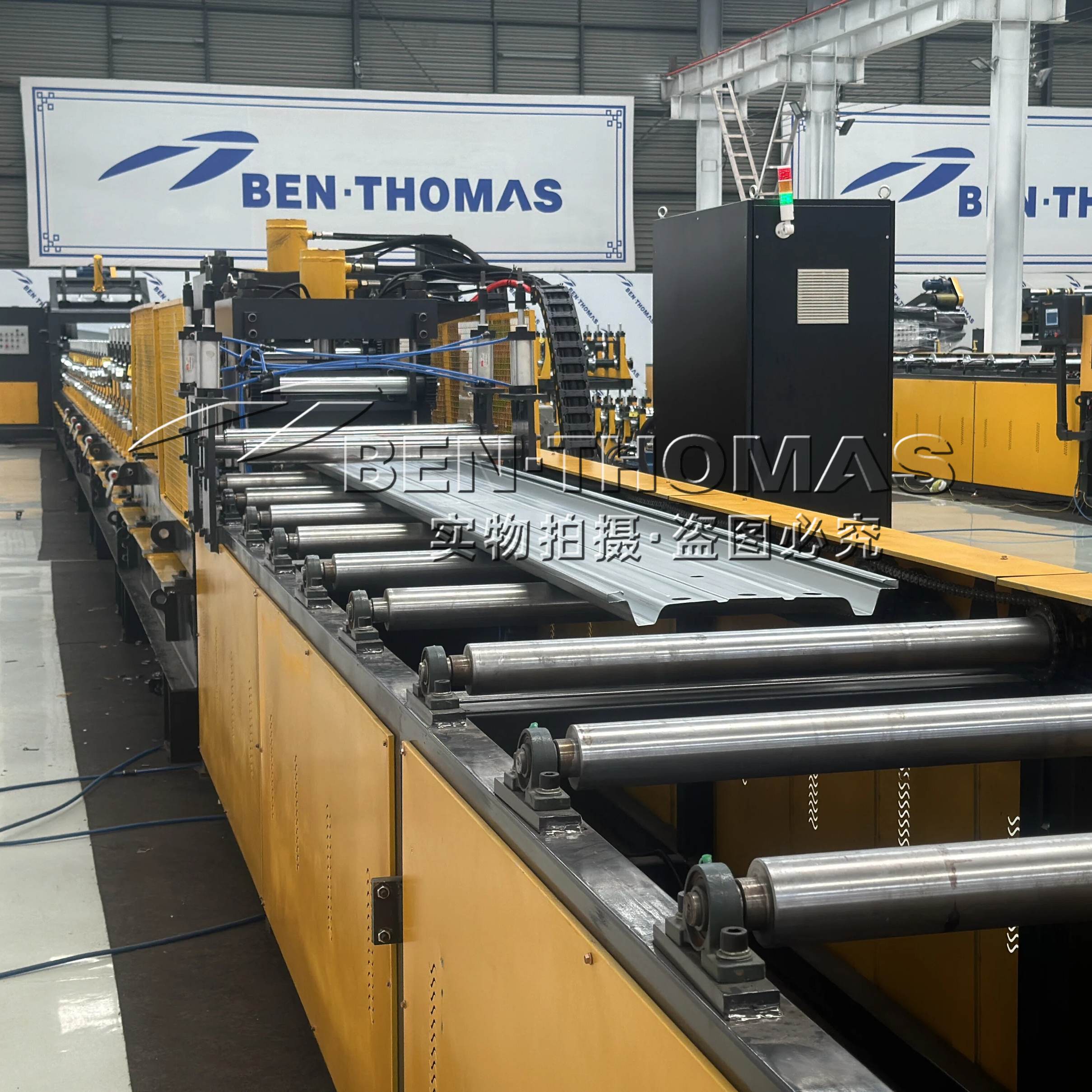
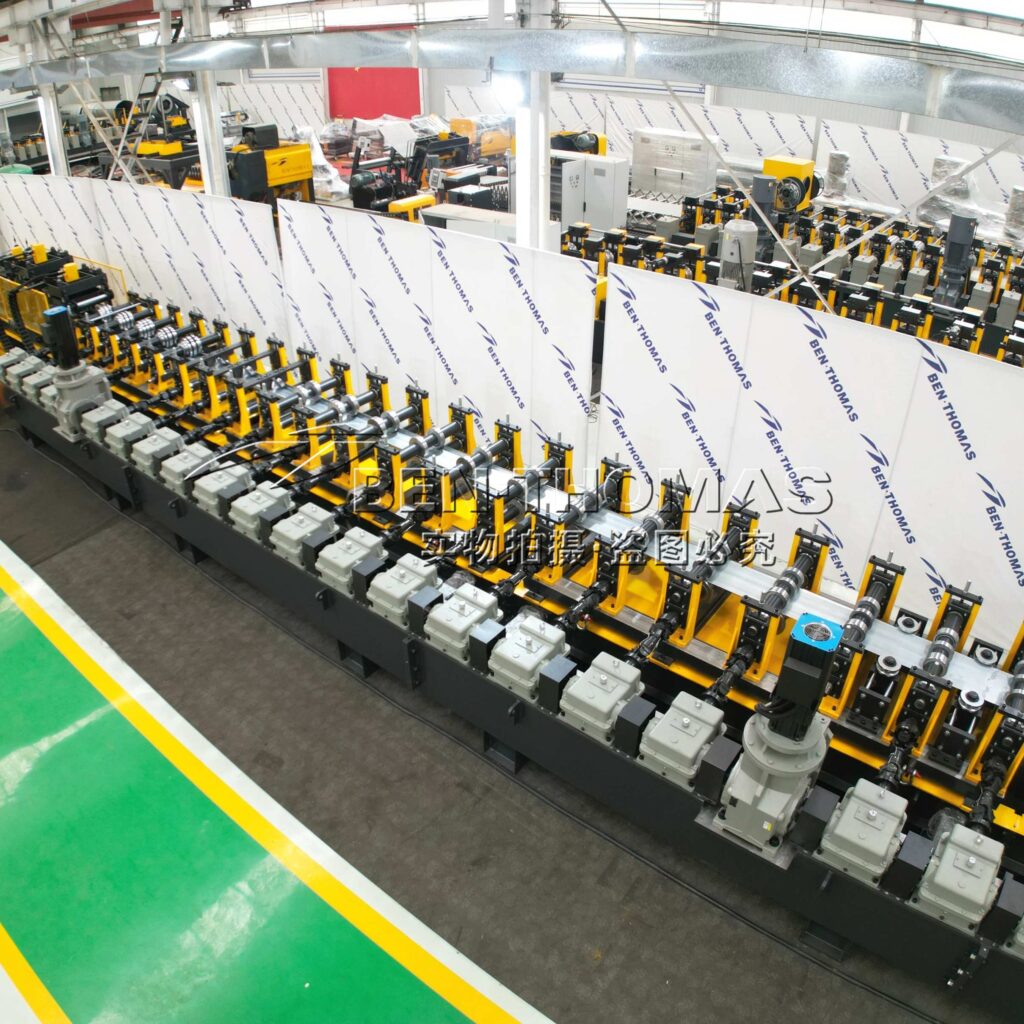
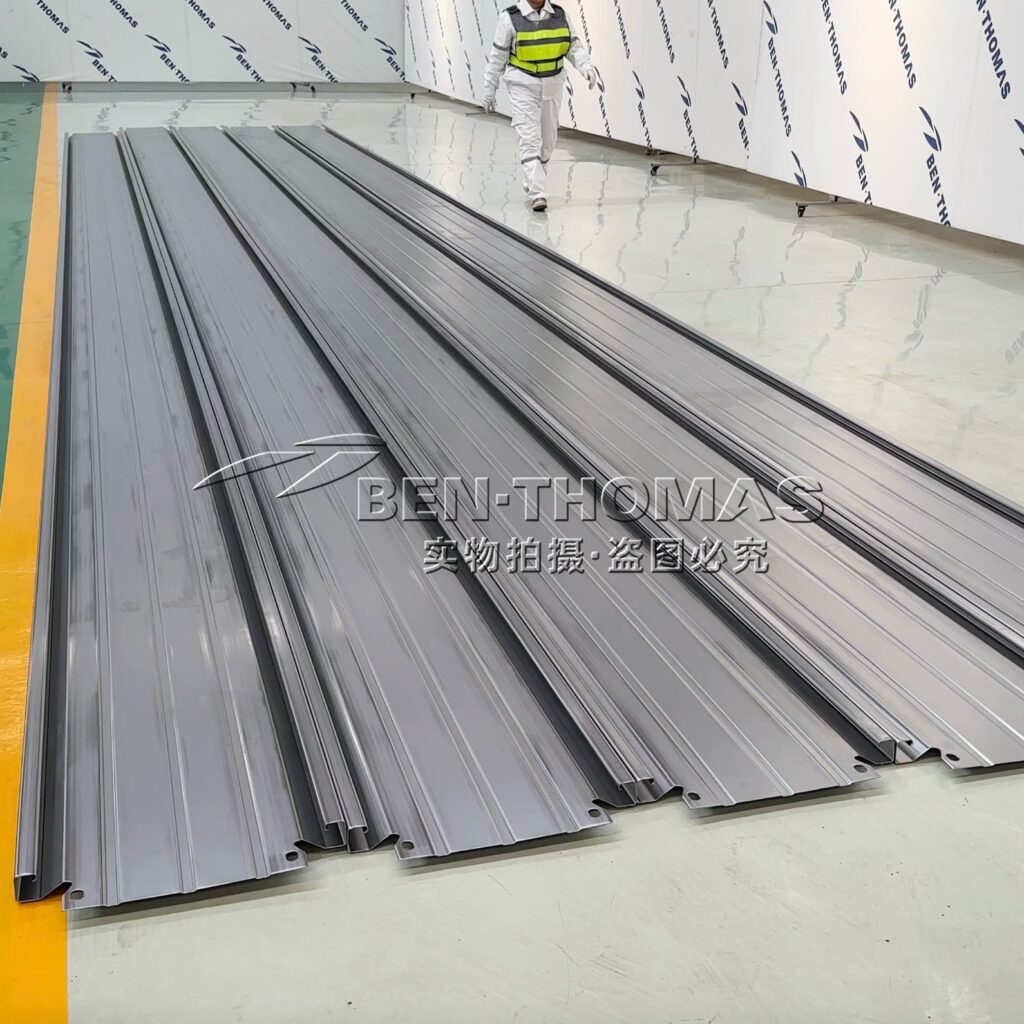
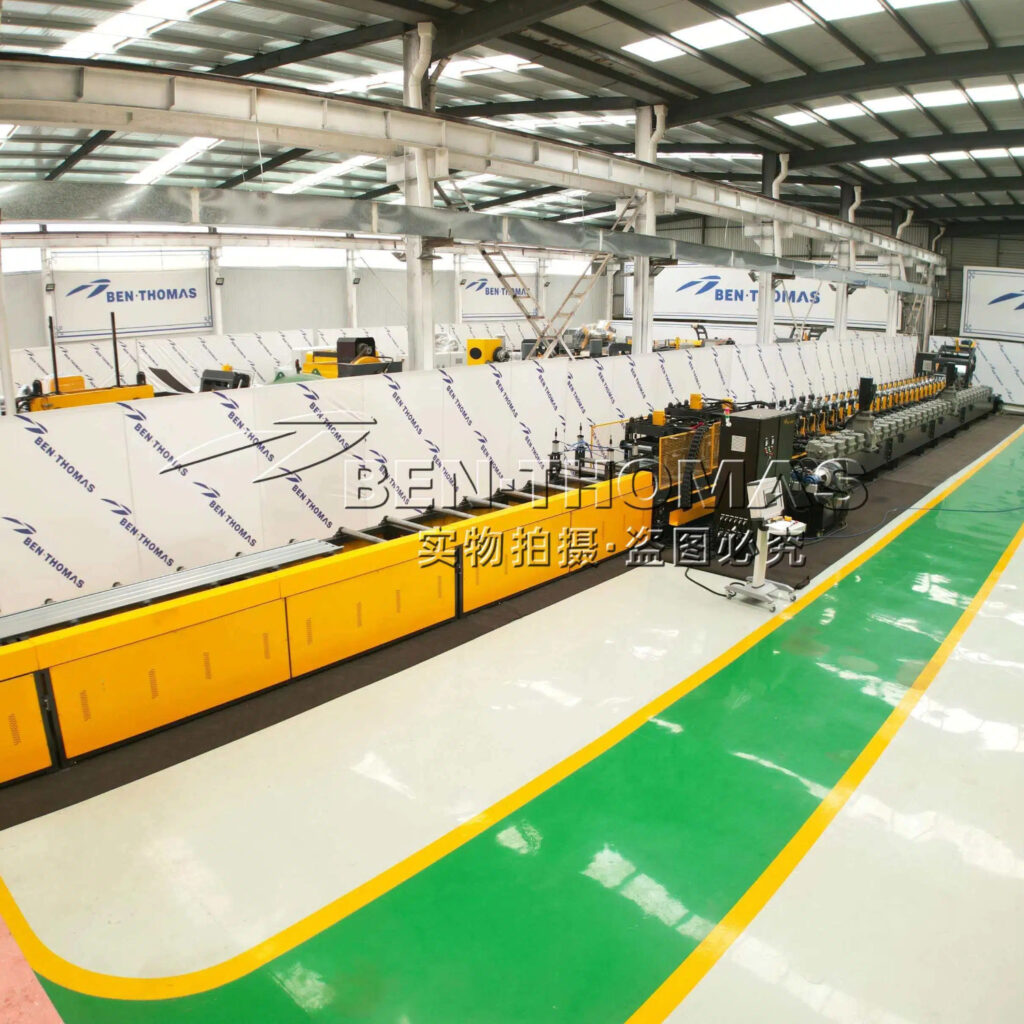
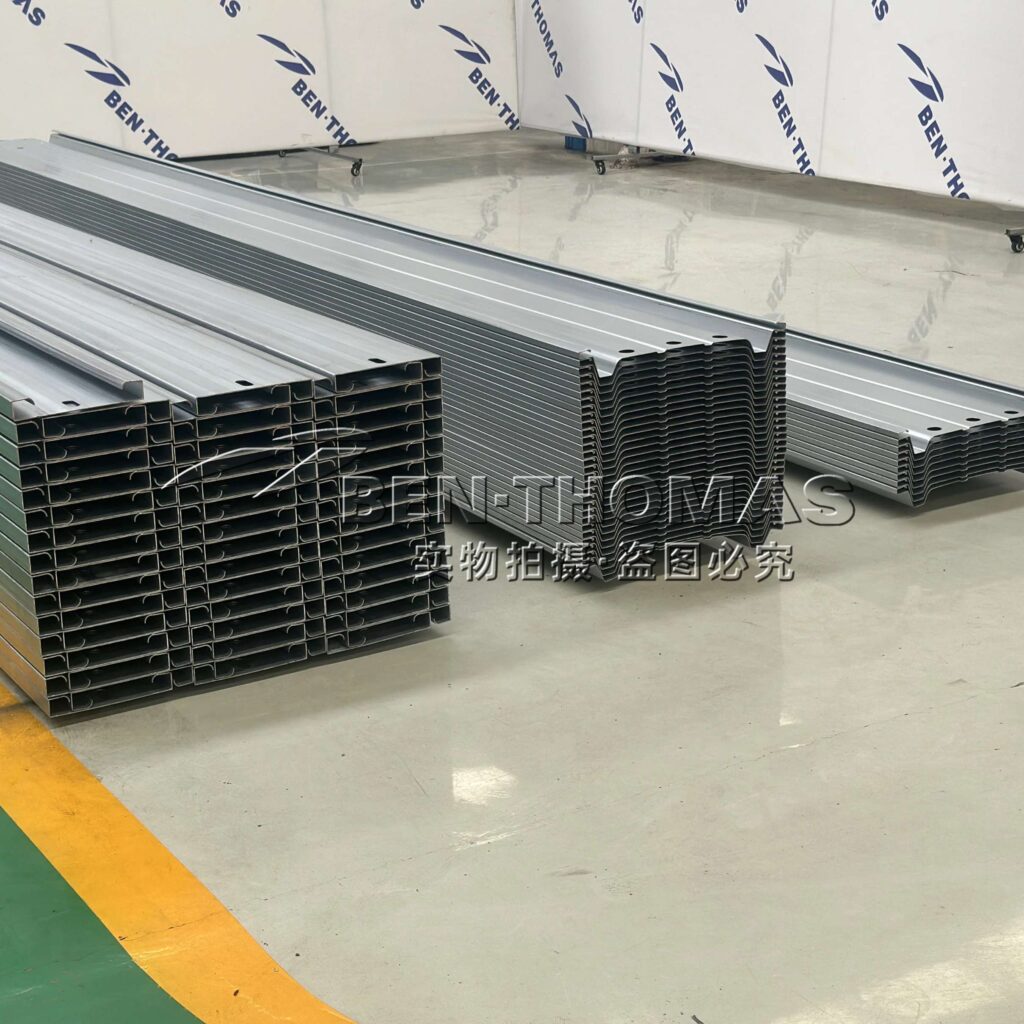
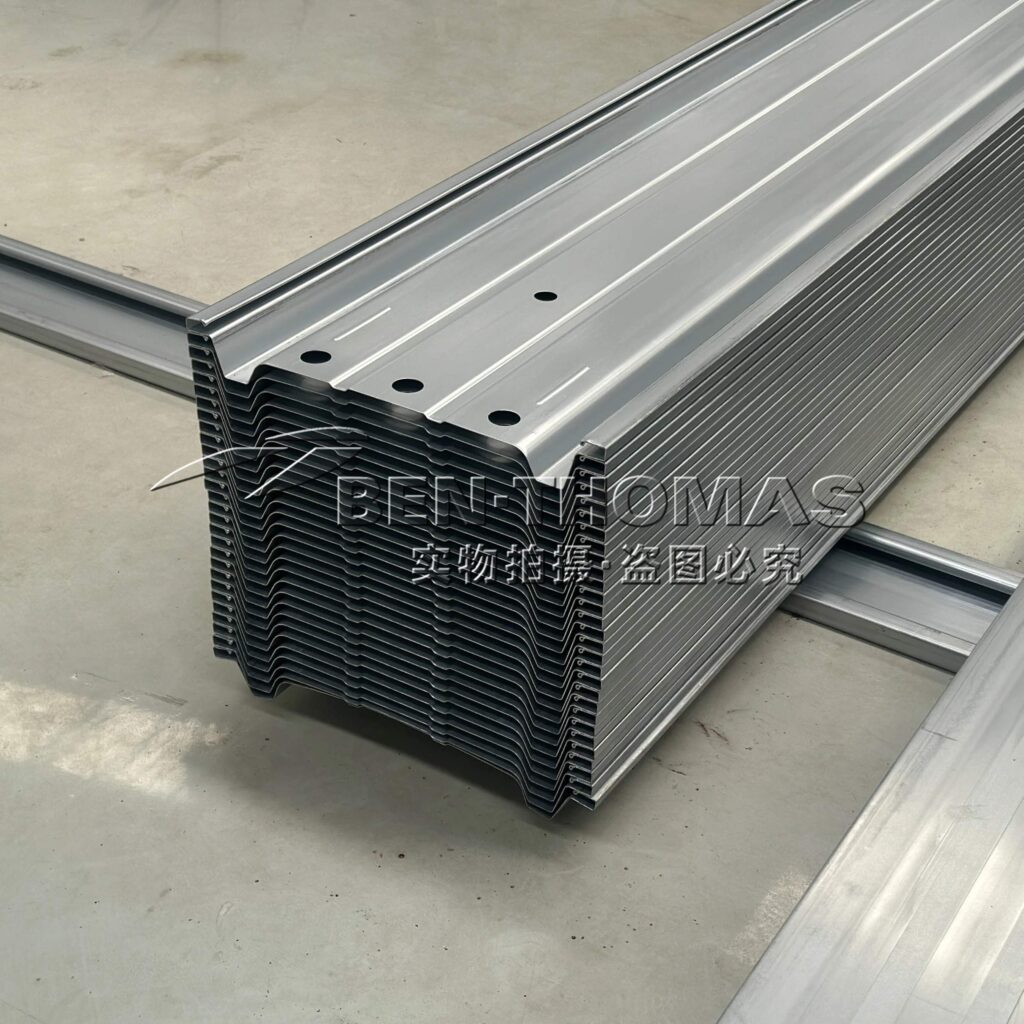
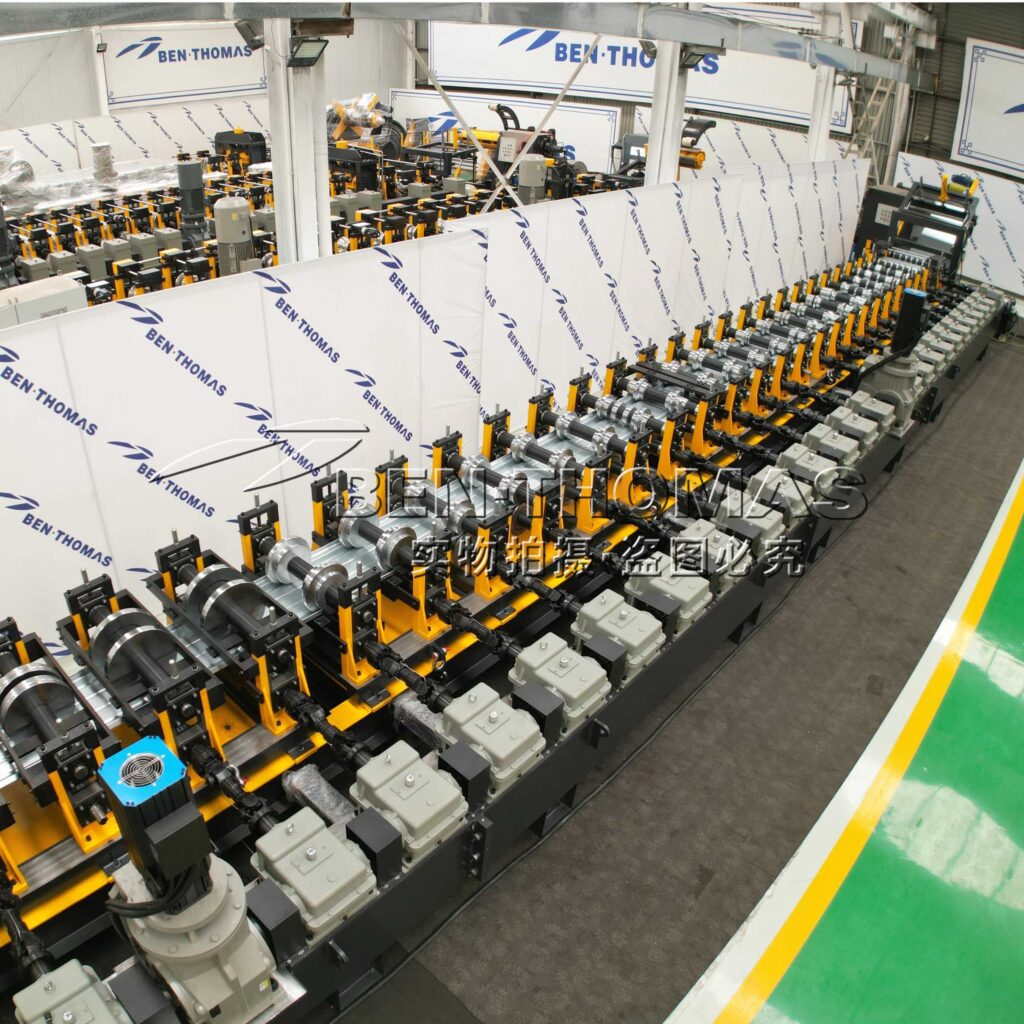
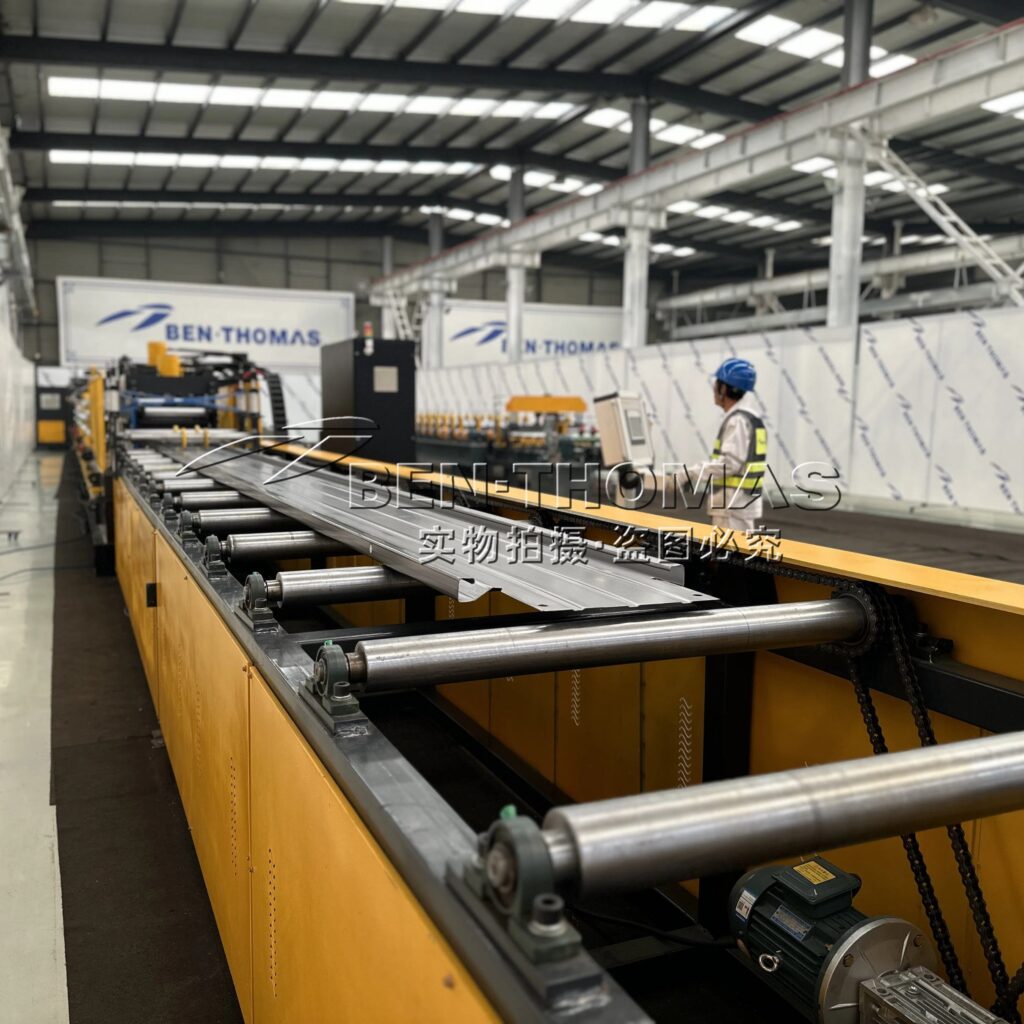
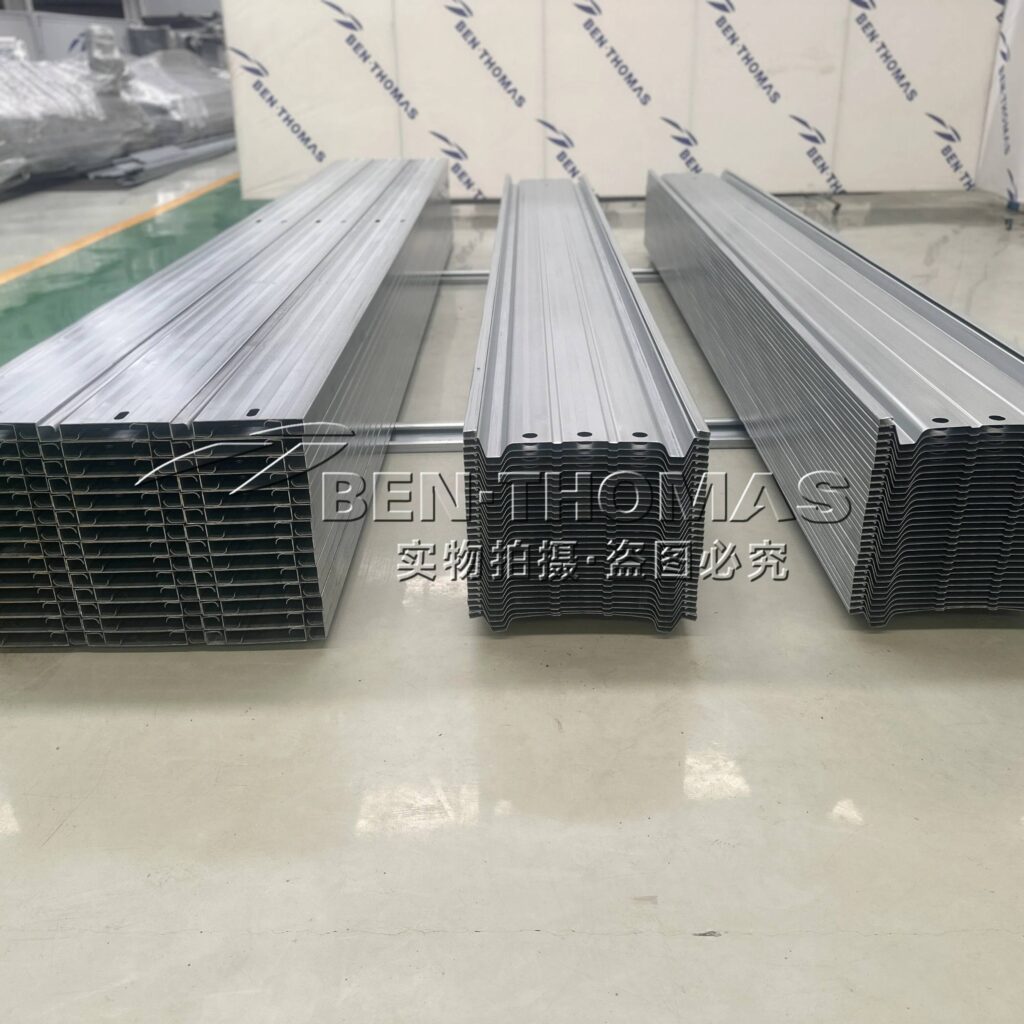
The electrostatic precipitator (ESP) anode plate roll forming machine transforms raw steel coils into high-precision anode plates through a fully automated cold roll forming process. To understand its efficiency and precision, it is critical to examine its core components and how they work in tandem. This article breaks down each component’s function, design, and role in producing high-quality ESP anode plates.
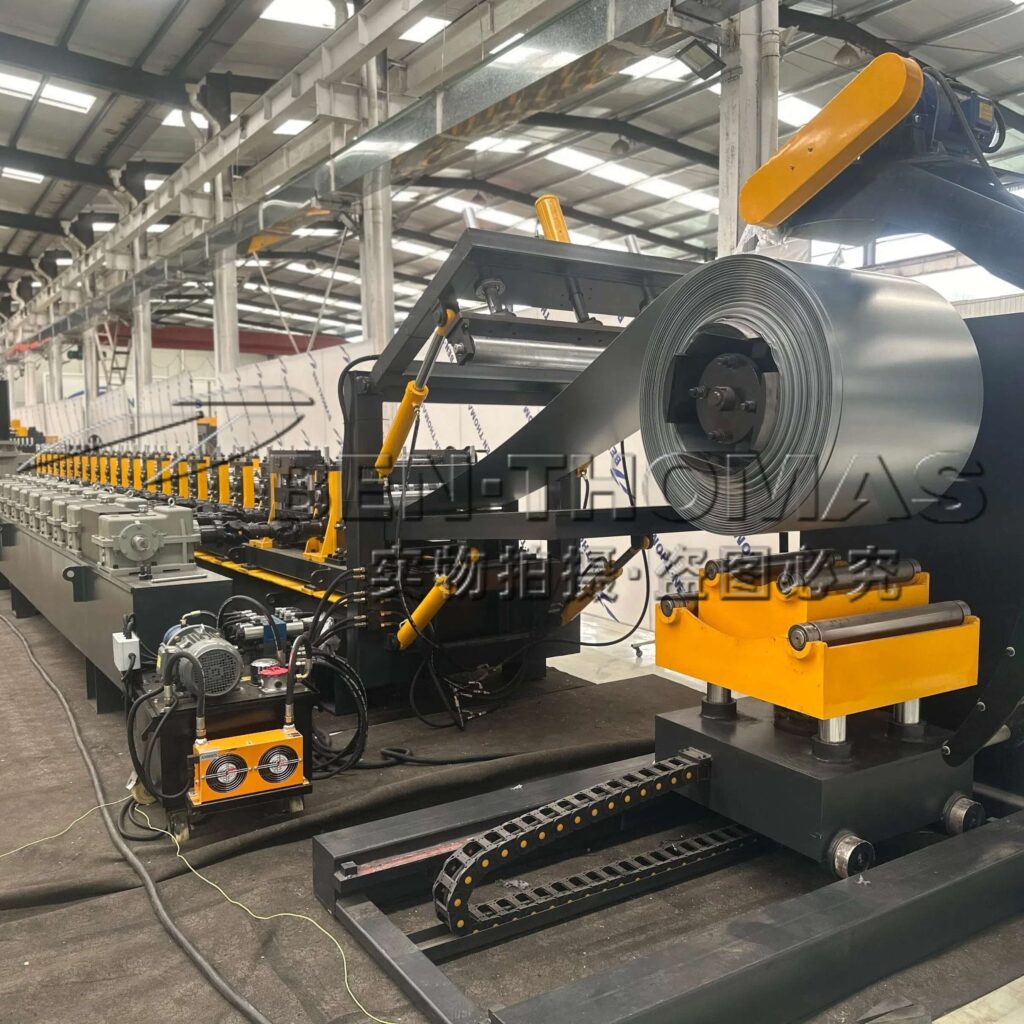
1. Decoiler (Uncoiler) – The Starting Point
- Heavy-Duty Design: Capable of holding coils weighing 1–5 tons, with a coil inner diameter of φ508mm and outer diameter of φ1200mm.
- Tension Control System: Adjustable hydraulic or mechanical tension ensures the steel strip is fed smoothly, preventing wrinkles, slippage, or distortion—critical for maintaining forming precision.
- Automatic Centering: Aligns the coil with the production line axis, eliminating misalignment during feeding.
2. Leveling & Hydraulic Punching Unit – Precision Preparation
This unit prepares the steel strip for forming by flattening and punching precision holes:
- Leveling Mechanism: 7–11 upper/lower rollers eliminate coil curvature, ensuring uniform thickness and flatness across the strip.
- Hydraulic Punching System: Equipped with high-precision dies (Cr12 steel) to punch mounting holes (long circular, square, or rectangular) per customer technical drawings. Servo-driven control ensures hole position accuracy of ±2.0mm, with consistent spacing and size—essential for anode plate assembly.
- PLC Synchronization: The punching process is synchronized with the line speed, ensuring holes are punched in the correct position relative to the final profile.
3. Main Roll Forming Machine – The Core Forming Unit
The main roll forming machine is the heart of the system, shaping the pre-punched steel strip into the final anode plate profile:
- Roller Stations: 16–22 sequential roller stations, each with precision-machined rollers (bearing steel, forged, heat-treated, and hard chrome-plated) that gradually bend the steel strip into corrugated or flat anode plate profiles (e.g., 480-type, 385-type).
- Main Shaft: Solid 45# steel shaft (φ80–110mm) with high rigidity, minimizing vibration during high-speed forming and ensuring profile consistency.
- Drive System: Chain or gear drive (1.5–2.5-inch chain) powered by a 11–22kW main motor, with frequency conversion for speed adjustment (6–20m/min).
- Profile Accuracy: Incremental bending prevents steel cracking or warping, delivering profile dimensional accuracy of ±0.5mm.
4. Hydraulic Cutting Unit – Finishing & Length Control
The cutting unit trims the continuous formed profile into finished anode plates of specified lengths:
- Hydraulic Shear: Cr12 steel blades (heat-treated and precision-ground) for clean, burr-free cutting, with a cutting power of 5.5–7.5kW.
- Fixed-Length Control: PLC-controlled encoder (Omron) ensures length accuracy of ±1.5mm, with adjustable cutting lengths (2–6m) based on customer requirements.
- Automatic Stacking (Optional): Some models include an automatic stacker to arrange finished plates into uniform piles, reducing manual labor and damage.
5. PLC Control System – The Brain of the Machine
The advanced PLC control system (Delta or Omron) integrates all components, enabling fully automated operation:
- Parameter Setting: Operators input production parameters (speed, length, hole positions) via a touchscreen, with preset programs for different anode plate models.
- Real-Time Monitoring: Displays production speed, length, and fault alerts, allowing quick troubleshooting and minimizing downtime.
- Safety Features: Emergency stop, overload protection, and interlock systems ensure safe operation.
All components work in perfect synchronization, controlled by the PLC system, to deliver continuous, high-precision production of ESP anode plates. This seamless integration eliminates manual intervention, reduces labor costs, and ensures consistent quality across every batch of anode plates—critical for meeting the strict performance requirements of industrial ESP systems.
Contact: Elise
Tel:+86-155 3281 7581
Email: elise@tgrfm.cn