
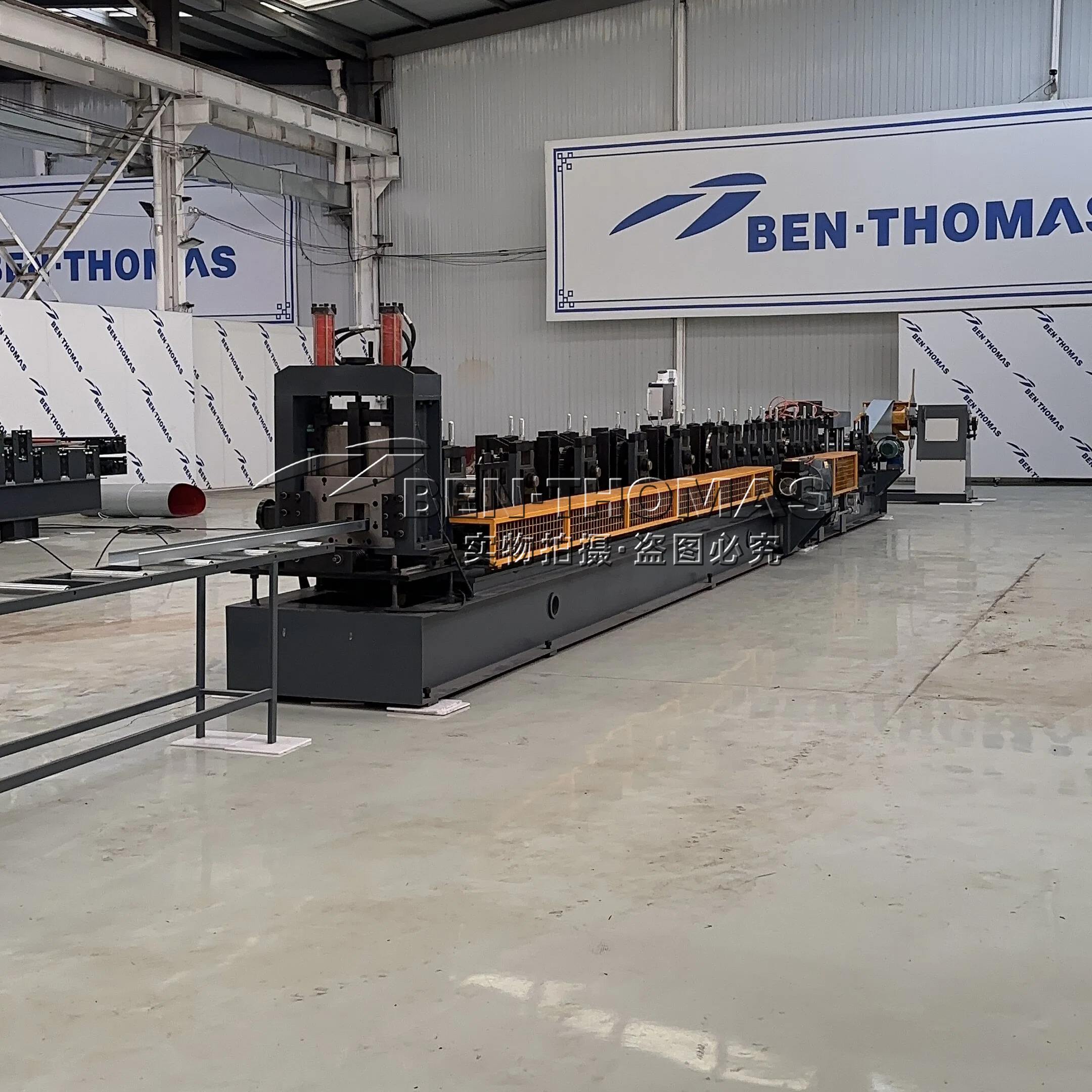
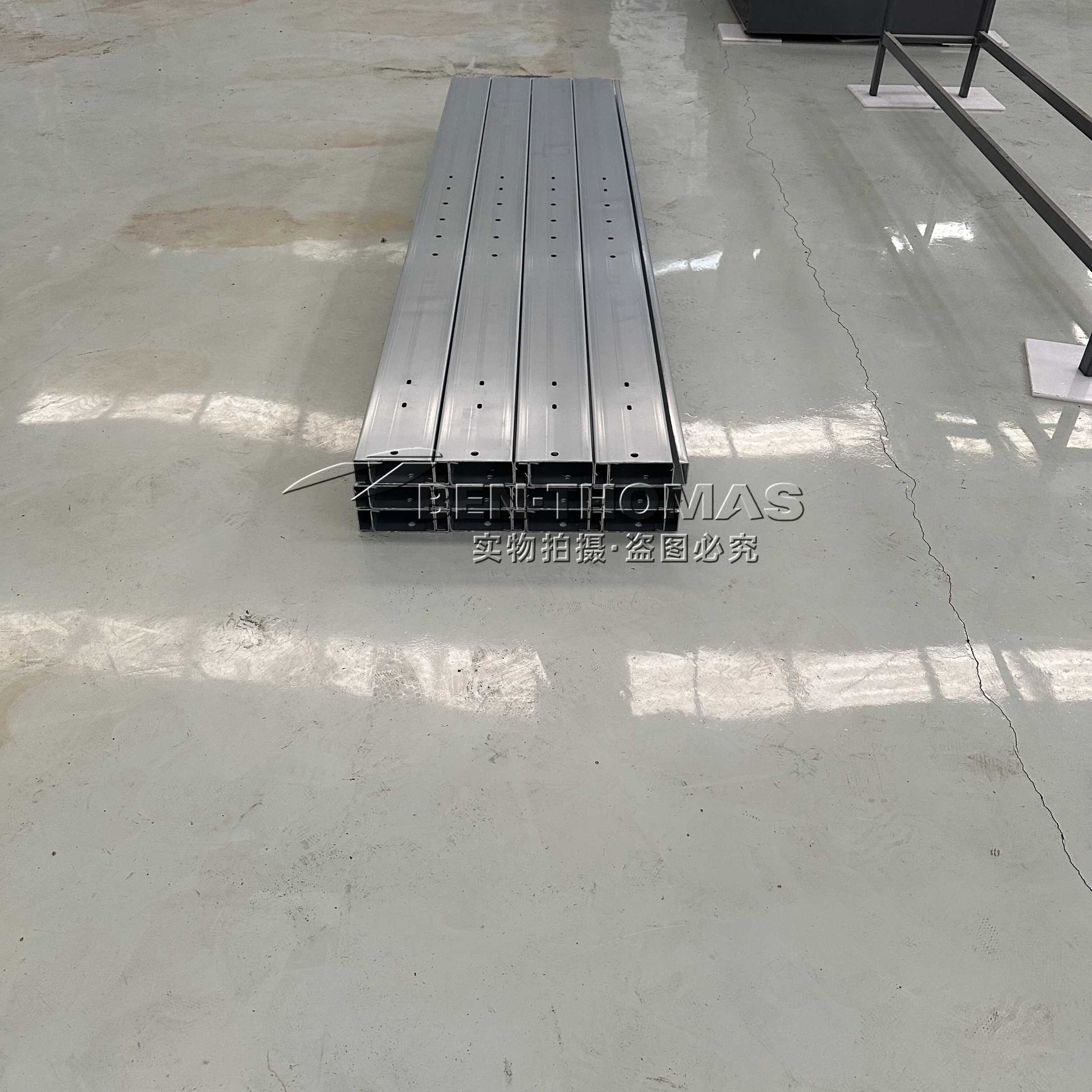
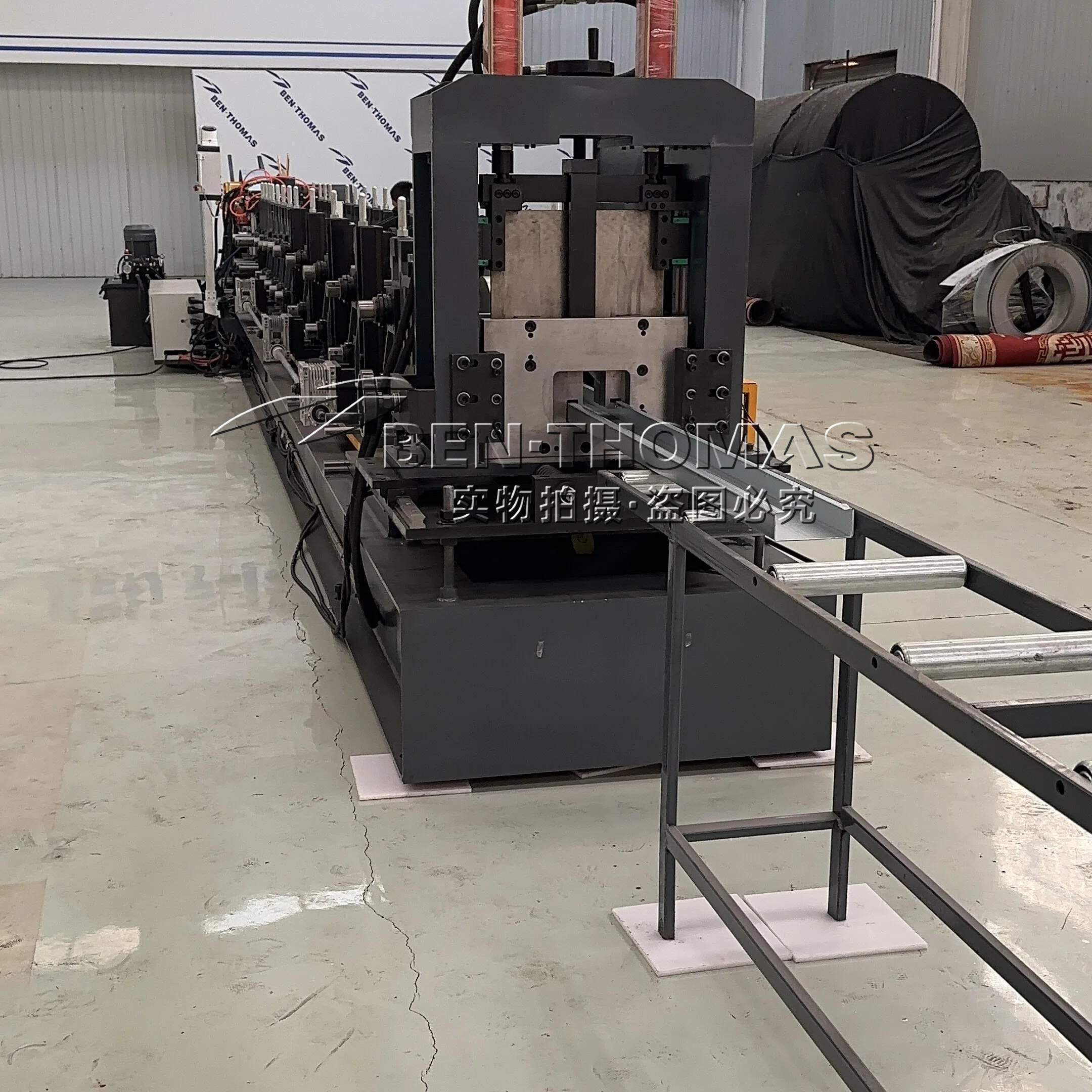
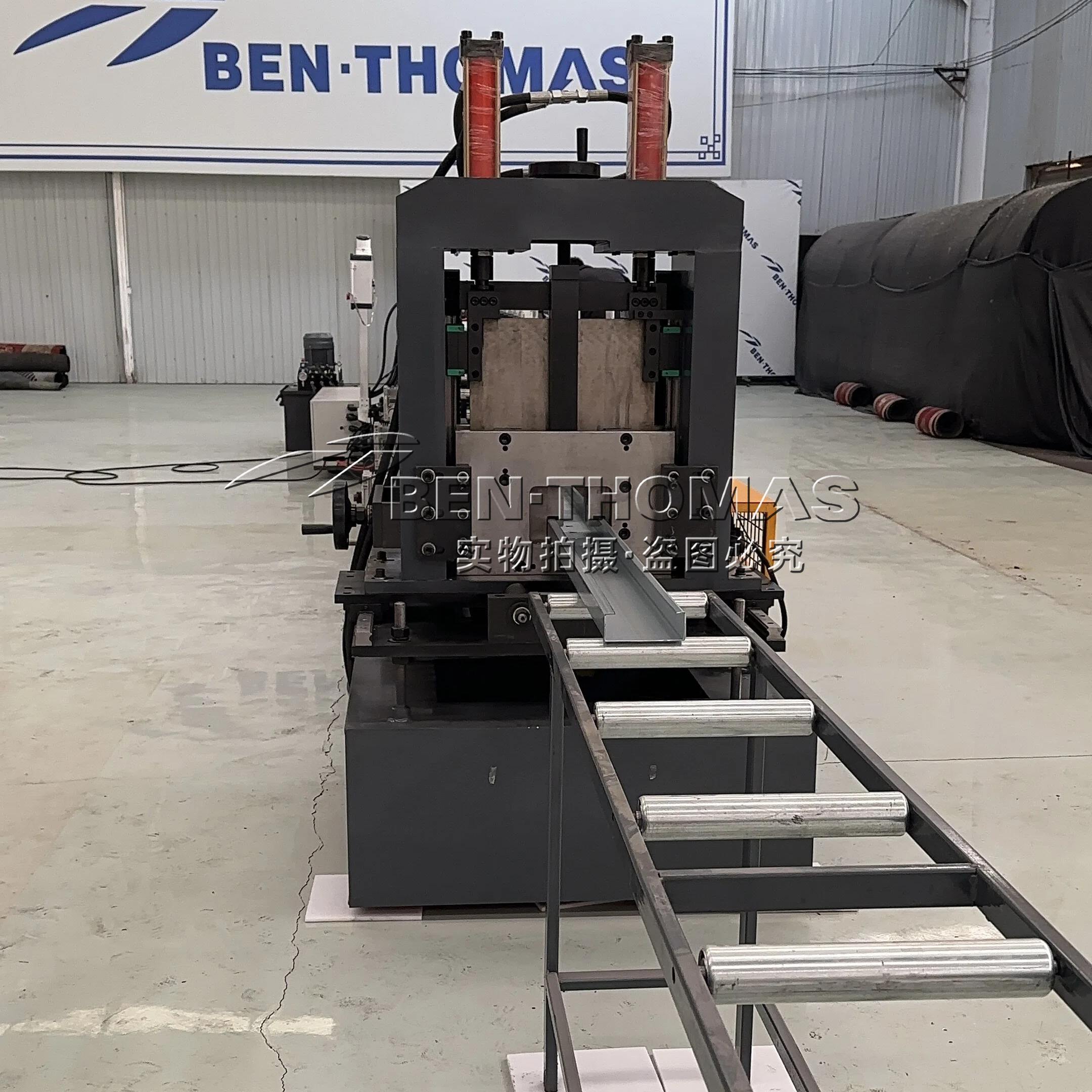
Metal C U Omega Profile Channel Rollforming Line
Discover what a C/U purlin roll forming line is and the industries it serves. Learn about solar structure manufacturing, pre-punching, automatic stackers, and PLC control for high-efficiency production.
Contact: Elise
Tel:+86-155 3281 7581
Email: elise@tgrfm.cn
Category: C U Omega purlin roll forming line
Description
What is a Metal C U Omega Profile Channel Rollforming Line and What Industries Is It Used For?
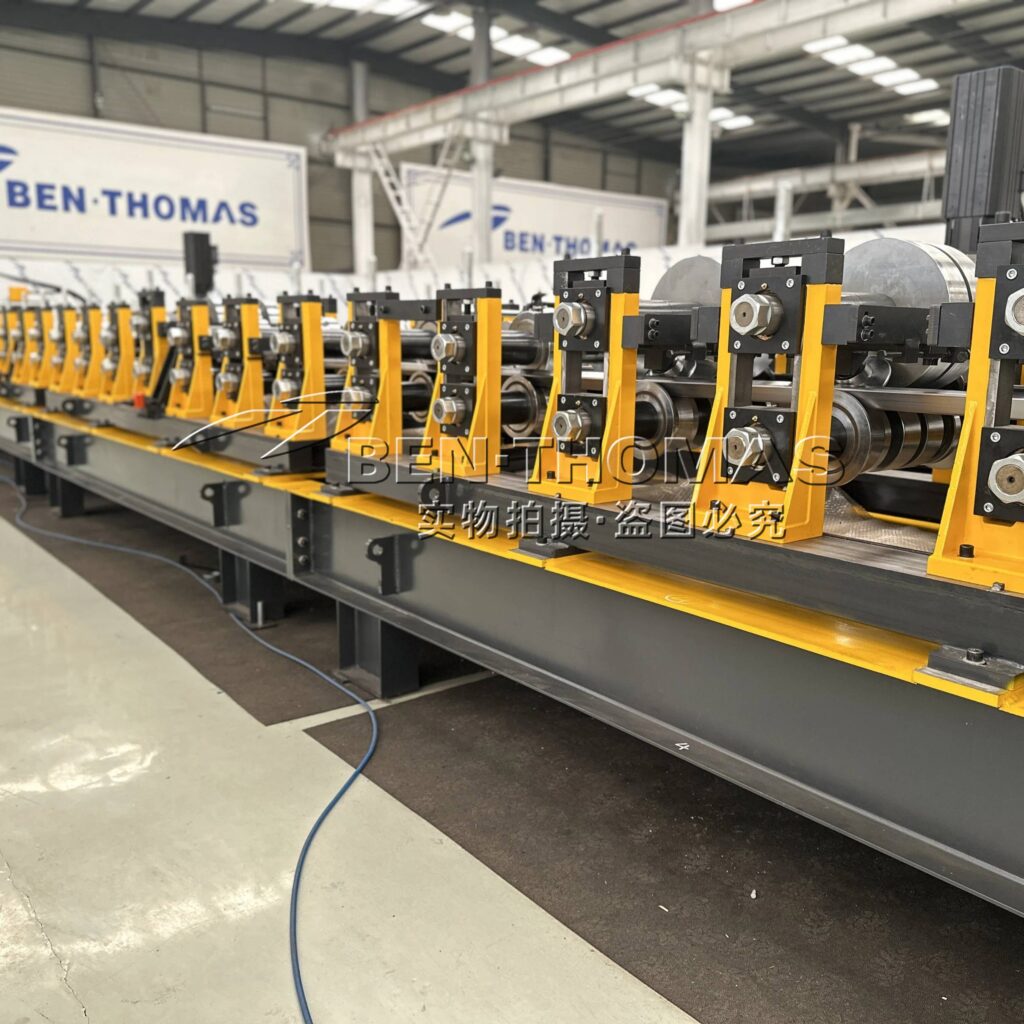
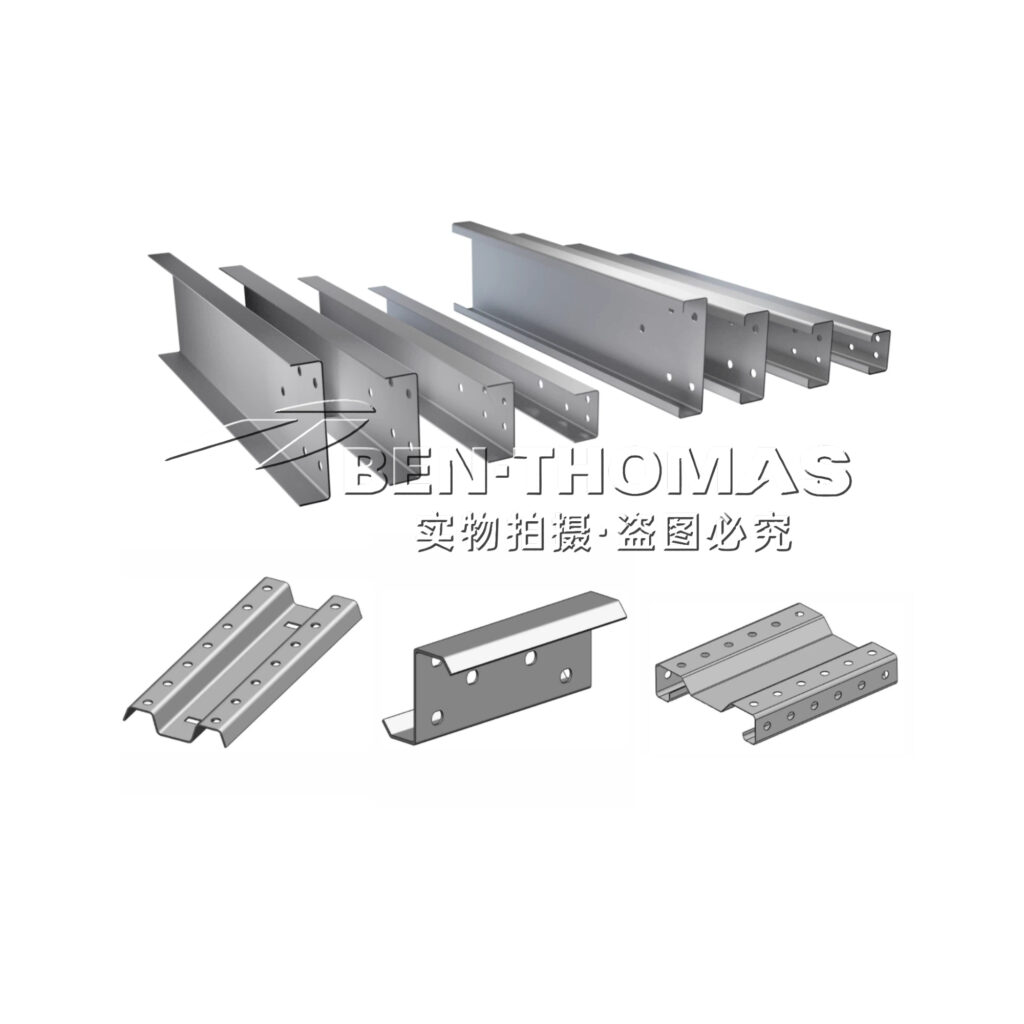
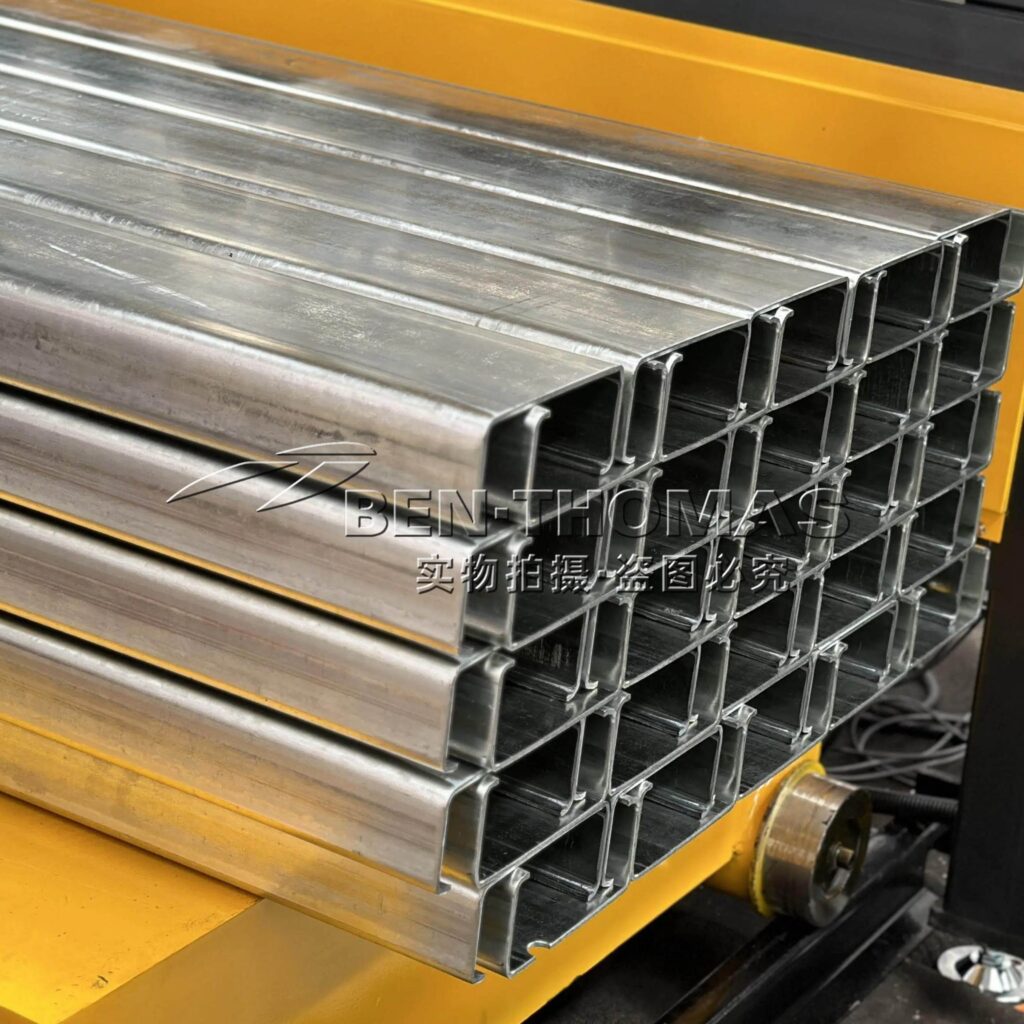
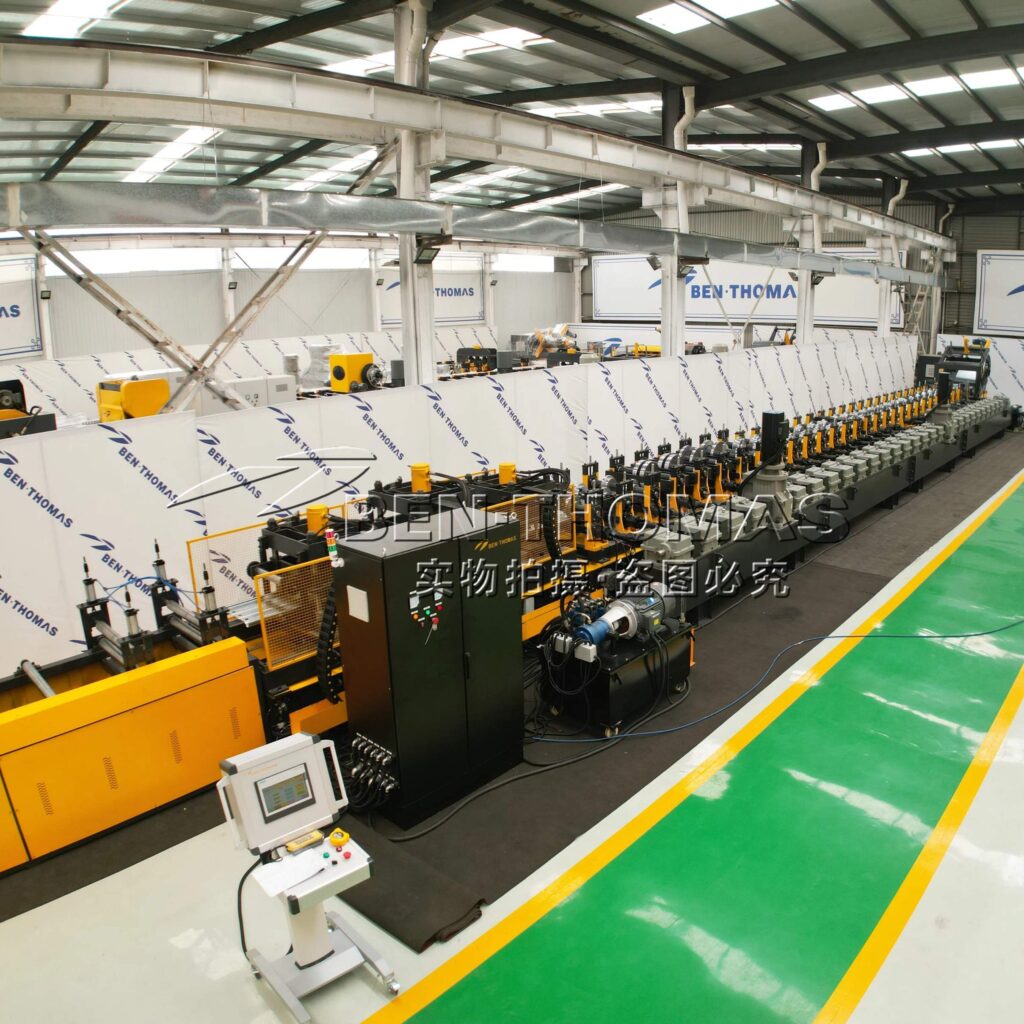
A C/U purlin roll forming line is a complete automated production system used to manufacture cold-formed steel sections. Through a continuous roll forming process, steel coils are gradually bent into C-shaped and U-shaped profiles with high precision and efficiency.
1. What is a C-shaped beam section barrier machine ?
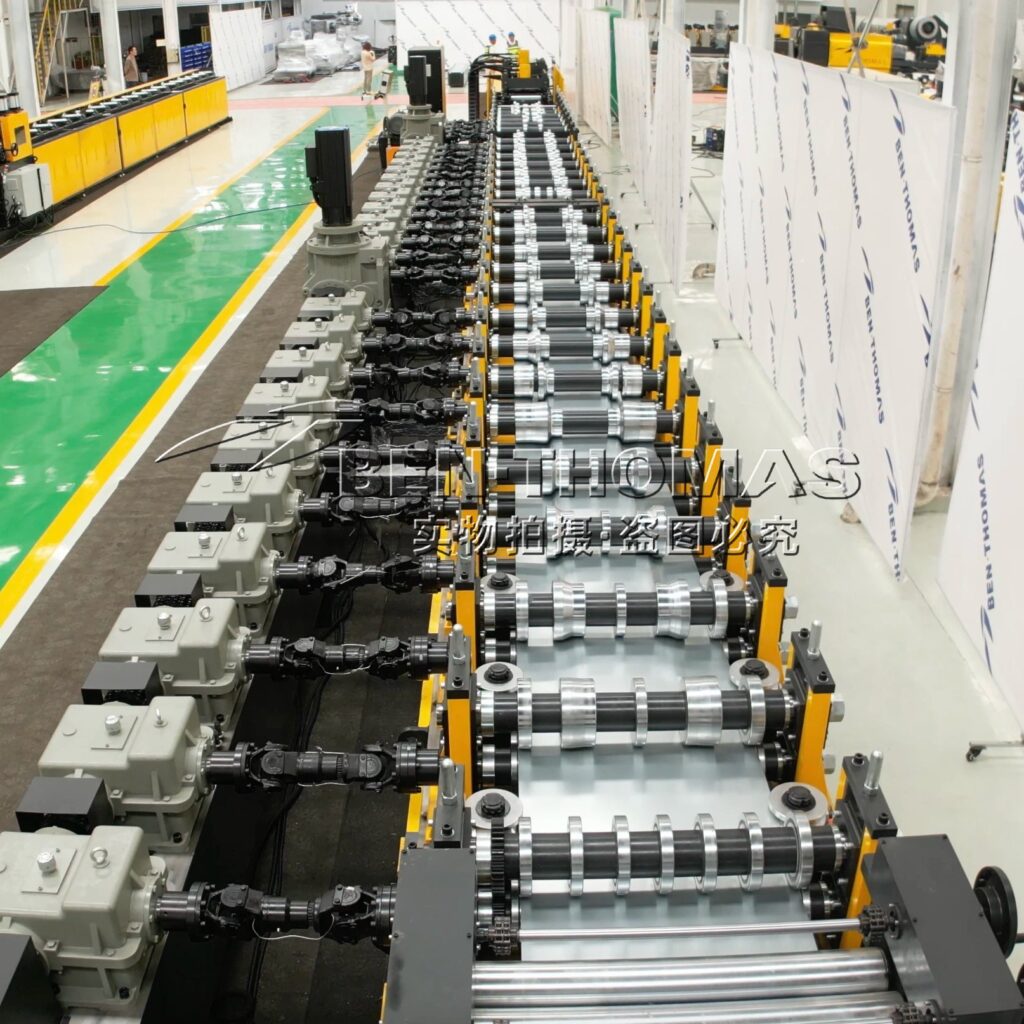
A C/U purlin roll forming line is a fully integrated industrial automation system. It typically consists of the following core components:
| Component | Function |
|---|---|
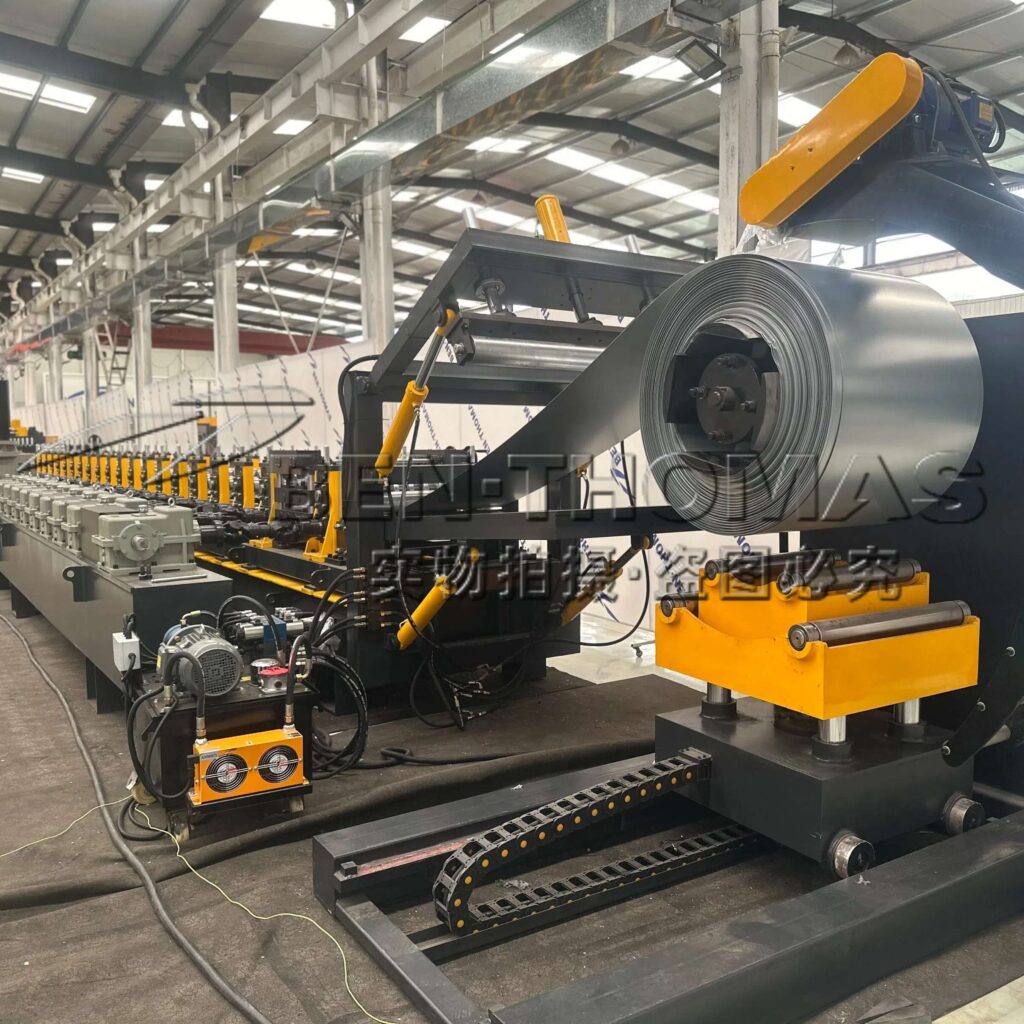
| Decoiler (Uncoiler) | Holds and steadily feeds the steel coil. Common capacities range from 10 tons and above, available in hydraulic or mechanical configurations. |
| Feeding & Leveling System | Flattens the steel strip to ensure a smooth, distortion-free entry into the forming section. |
| Punching System | Performs hole punching either before forming (pre-punching) or after forming (post punching), allowing precise hole patterns for bolts and connectors. |
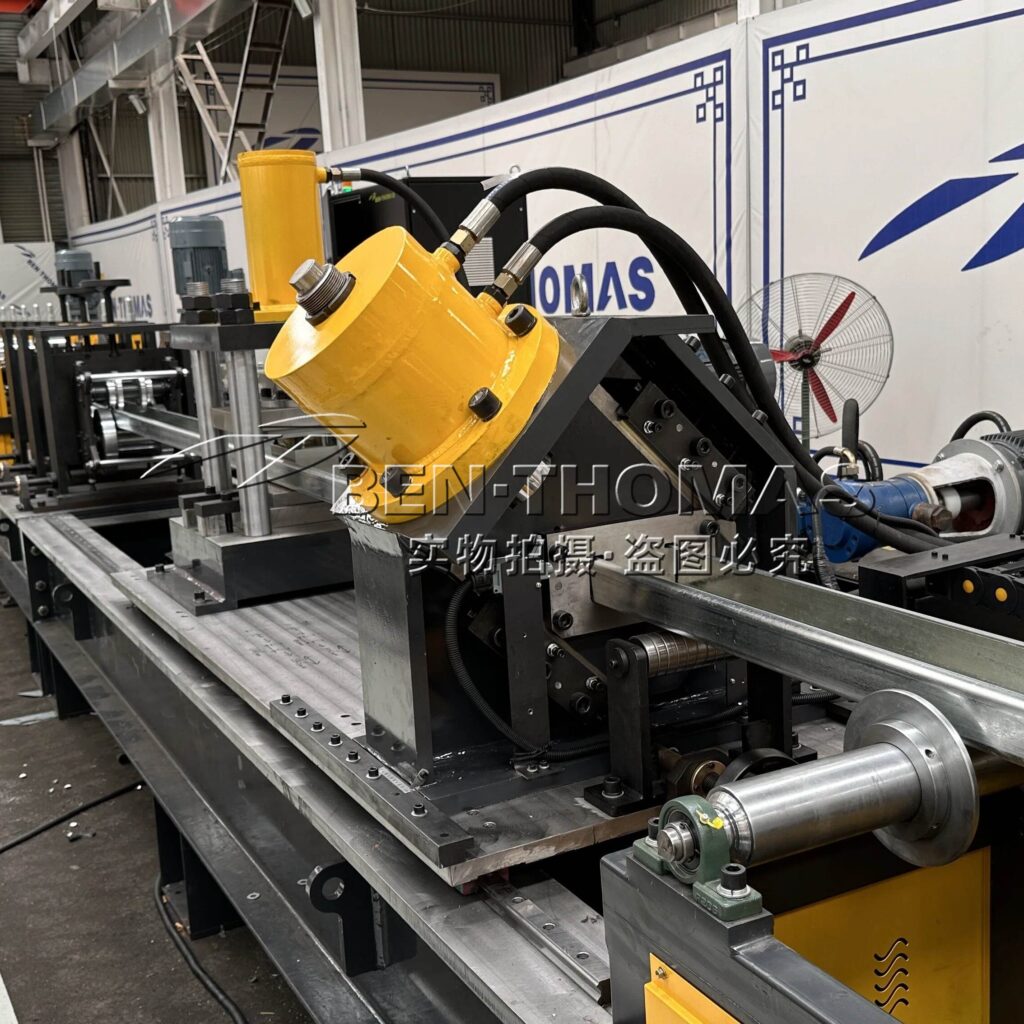
| Roll Forming Machine | Gradually cold-forms the steel strip into the desired C or U cross-section through a series of roller stations. |
| Hydraulic Cutting System | Cuts the finished profile to the programmed length with a clean, burr-free finish. |
| Automatic Stacker System | Automatically collects and stacks finished purlins, minimizing manual labor and improving safety. |
| PLC Control System | Centralized control that manages the entire production line, stores process parameters, and enables quick changeovers between different profiles and hole patterns. |
This production line is characterized by high precision, high speed, and a high degree of automation, making it suitable for continuous mass production or flexible small-batch runs with rapid changeovers.
2. What Industries Is It Mainly Used For?
C and U purlins offer an excellent strength-to-weight ratio, simple connection methods, and efficient material utilization. As a result, they are widely used across several key industries.
2.1 Solar Photovoltaic (PV) Industry (Currently the Most Important Application)
-
Solar Mounting Structures: C purlins serve as the primary support beams in both ground-mounted solar farms and rooftop PV systems. Solar panels are bolted directly onto these purlins to form stable arrays.
-
Solar Trackers: In advanced solar tracking systems, C and U profiles are used for main beams, purlins, and drive components. These applications demand extremely high hole-precision and the ability to handle high-strength steel.
2.2 Steel Structure & Construction Industry
-
Pre-Engineered Buildings (PEBs): Used as roof purlins and wall girts in industrial warehouses, factories, and commercial buildings.
-
Portal Frame Structures: Serve as secondary structural members that support cladding and transfer loads to the main steel frame.
-
Prefabricated & Temporary Buildings: C and U purlins form the structural skeleton for portable cabins, container modifications, and temporary site offices.
2.3 Automotive & Machinery Industry
-
Vehicle Frames: U-shaped sections are often used for chassis components in trailers, trucks, and specialty vehicles.
-
Conveyor Systems: Used as support rails, guide tracks, and structural frames in automated material handling equipment.
2.4 Warehousing & Logistics
-
Industrial Shelving & Racking: C purlins are the primary raw material for heavy-duty pallet racks, cantilever racks, and mezzanine flooring systems. Pre-punched holes allow for adjustable shelf heights.
2.5 Agriculture
-
Greenhouses: C and U profiles are widely used as structural frames for agricultural greenhouses due to their corrosion resistance (when galvanized) and ease of assembly.
-
Livestock Facilities: Used for building animal shelters, barns, and ventilation system supports.
2.6 Electrical & Infrastructure
-
Cable Trays & Ladders: U-shaped sections are commonly used as side rails for cable management systems.
-
Electrical Enclosures: Used for internal framing and support structures within electrical panels and control cabinets.
3. Why the Solar Industry Has Special Requirements for Metal c u profile purlins machine ?
The solar PV industry imposes stricter demands on C/U purlin roll forming lines compared to many other sectors. Below are the key requirements:
| Requirement | Explanation |
|---|---|
| High Hole-Position Accuracy | Solar panel mounting holes must align perfectly with field conditions. Tolerances are typically required to be within ±0.5mm; deviation can lead to costly site rework. |
| Complex Hole Patterns | A single purlin may require holes on the web, flanges, or both, with variable spacing. This requires a pre-punching or post-punching system capable of dynamic pattern changes. |
| High-Strength Material Handling | Solar structures increasingly use high-strength steel (450MPa to 600MPa) to withstand wind loads while minimizing material usage. The roll former must have sufficient rigidity and hardened rollers to prevent spring-back. |
| High Production Capacity | Utility-scale solar projects often require thousands of tons of purlins within tight deadlines. High-speed forming combined with an automatic stacker system ensures continuous output without bottlenecks. |
| Length Flexibility | Purlin lengths vary significantly based on project layout, ranging from 3 meters for commercial rooftops to 14 meters for large-scale ground mounts. A PLC control system enables rapid recipe changes with minimal downtime. |
4. Conclusion
A C/U purlin roll forming line is a comprehensive automated system that transforms steel coils into precision C-shaped and U-shaped profiles. It serves a wide range of industries, including solar photovoltaic, steel construction, automotive, warehousing, agriculture, and infrastructure.
Among these, the solar PV industry has emerged as the most demanding and fastest-growing application sector. To remain competitive in solar structure manufacturing, it is essential to invest in a production line equipped with:
-
Heavy-duty decoiler (e.g., 10 tons or more) for uninterrupted production
-
Precision punching system (pre-punch or post-punch) for accurate hole patterns
-
PLC controller for centralized operation and quick changeovers
-
Hydraulic cutting for clean, accurate cuts
-
Automatic stacker system to reduce labor and increase throughput
Such a line not only maximizes production efficiency but also ensures the consistent quality required to meet the rigorous standards of modern solar projects and other industrial applications.
Contact: Elise
Tel:+86-155 3281 7581
Email: elise@tgrfm.cn
- Get in touch
360 Degree For Your Roll Forming Needs!
Have questions about our roll forming lines, or partnership opportunities? Our team is ready to assist you with expert support and personalized solutions.
- CONTACT US