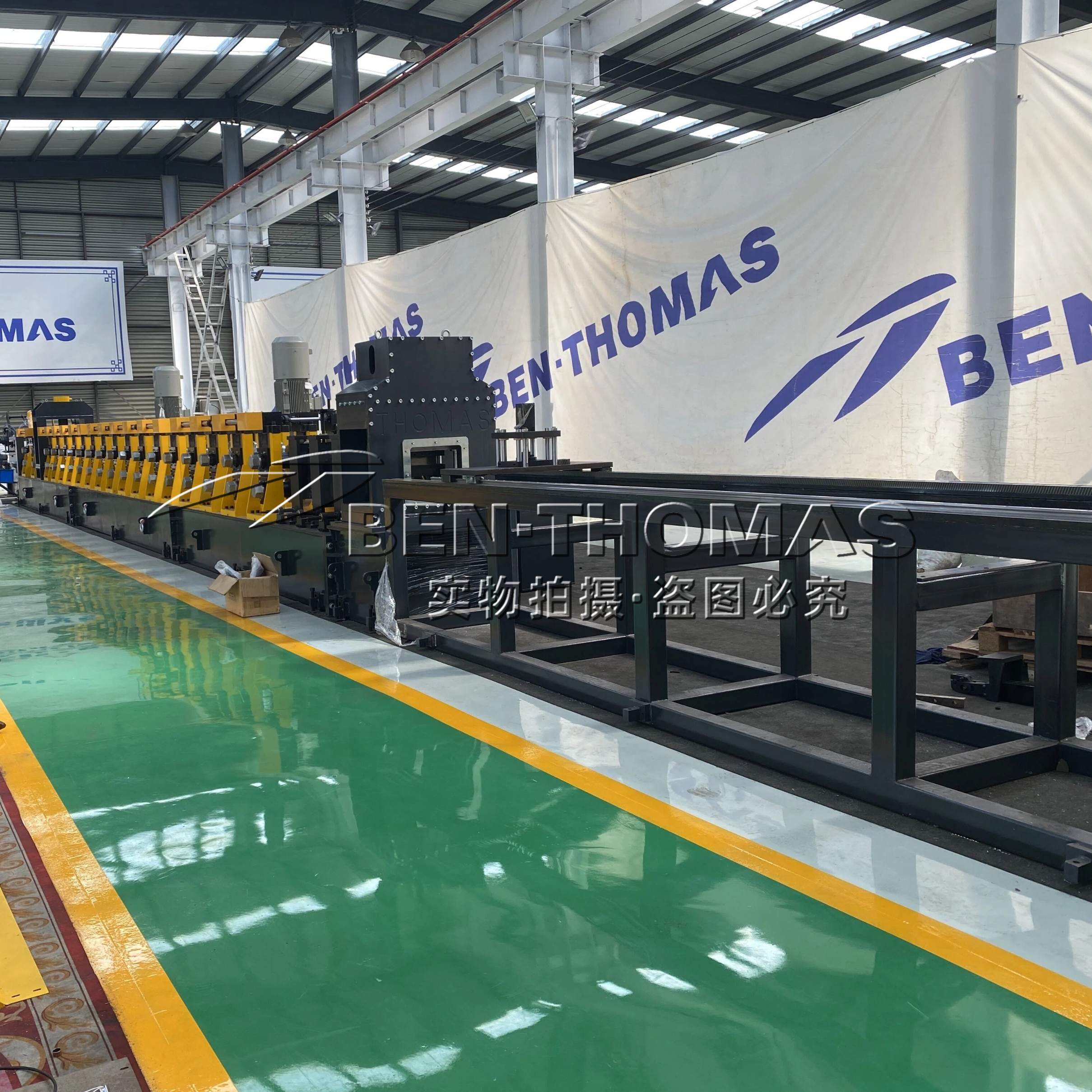
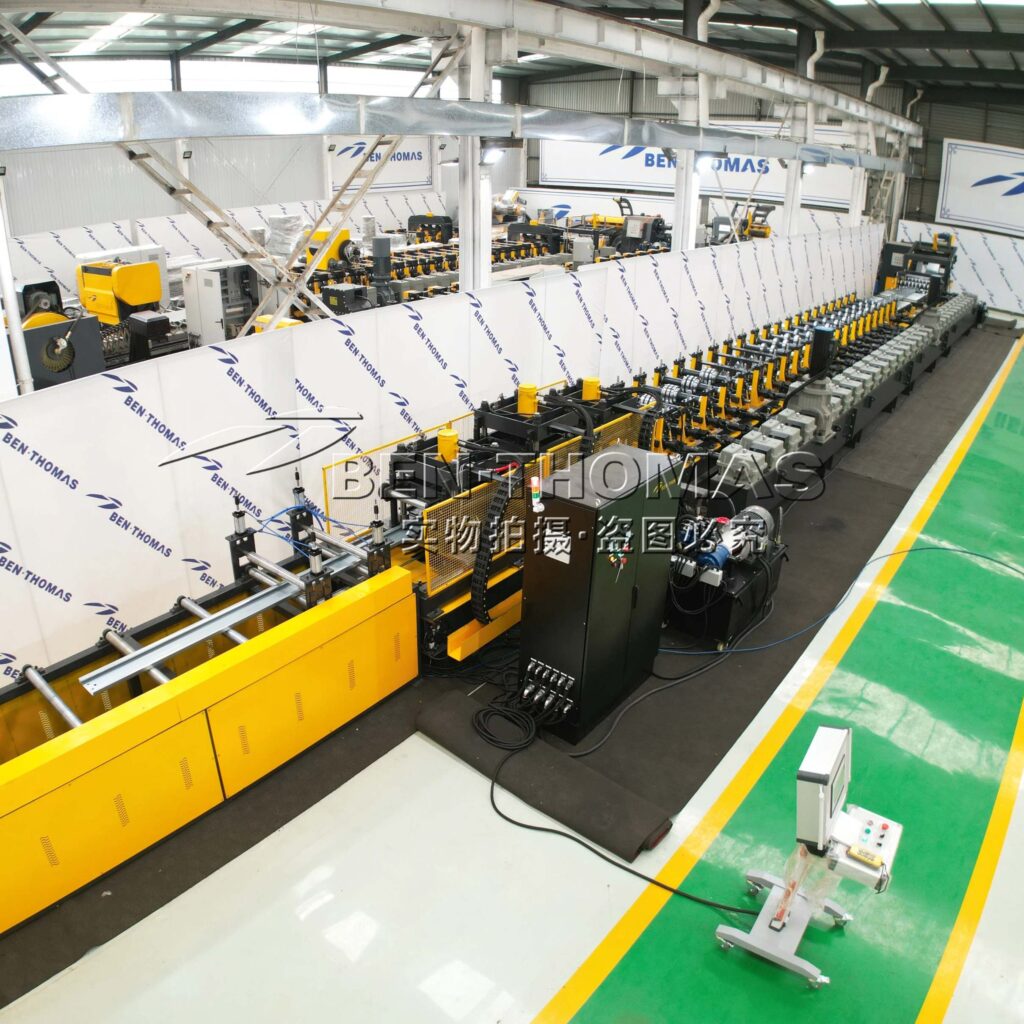
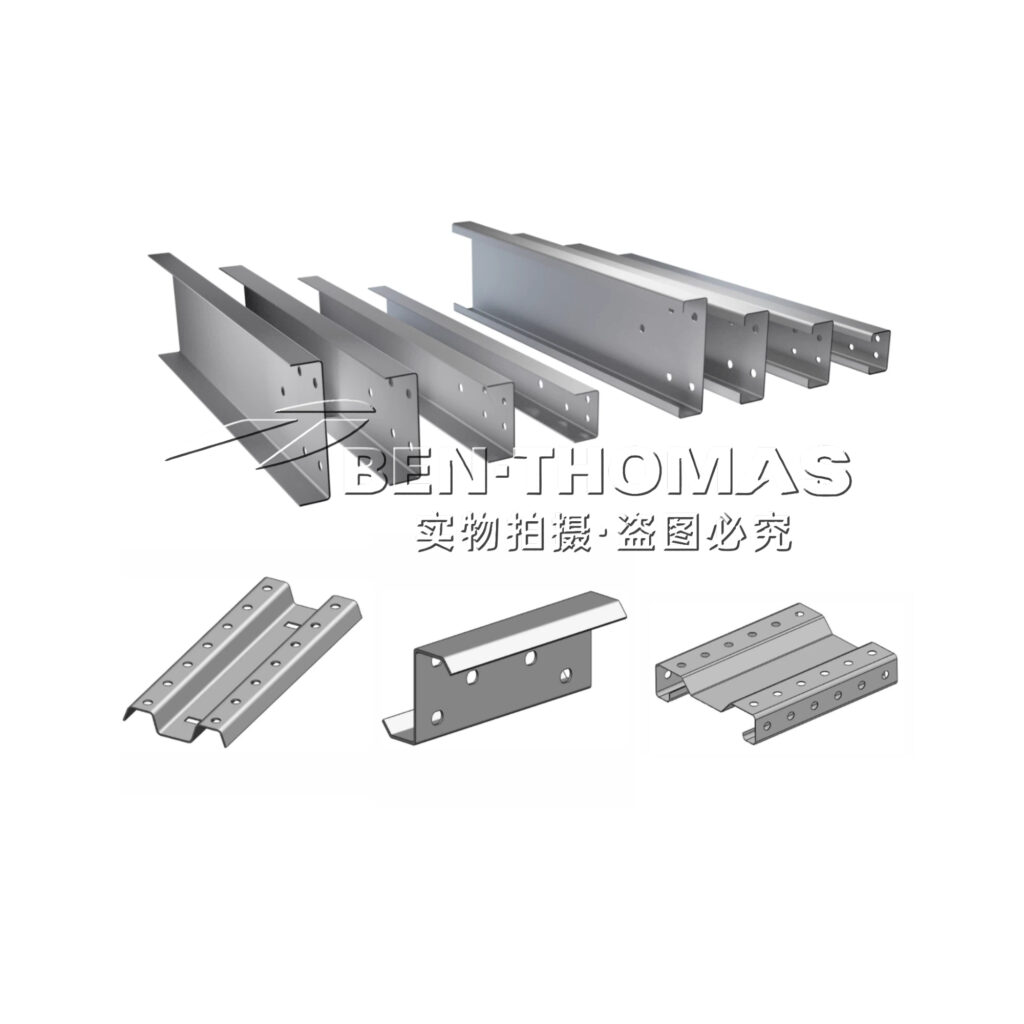
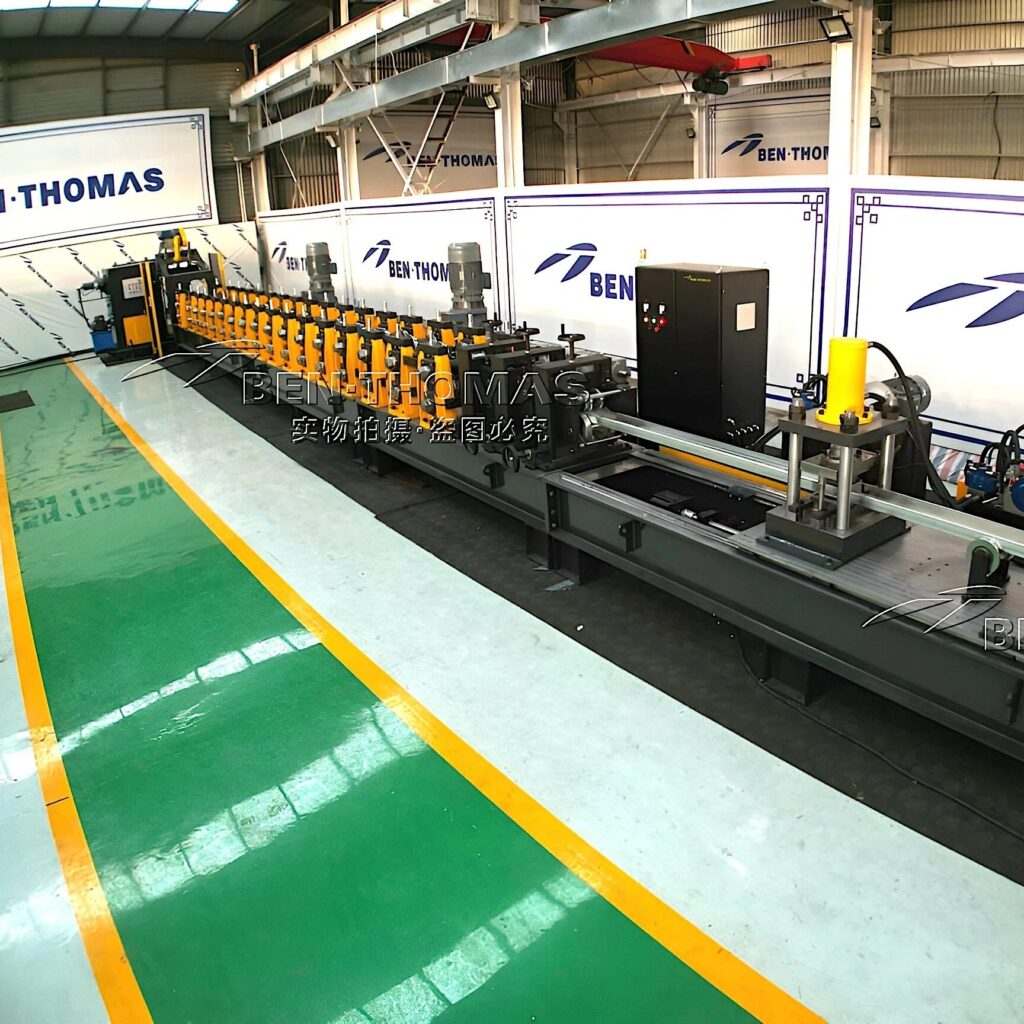
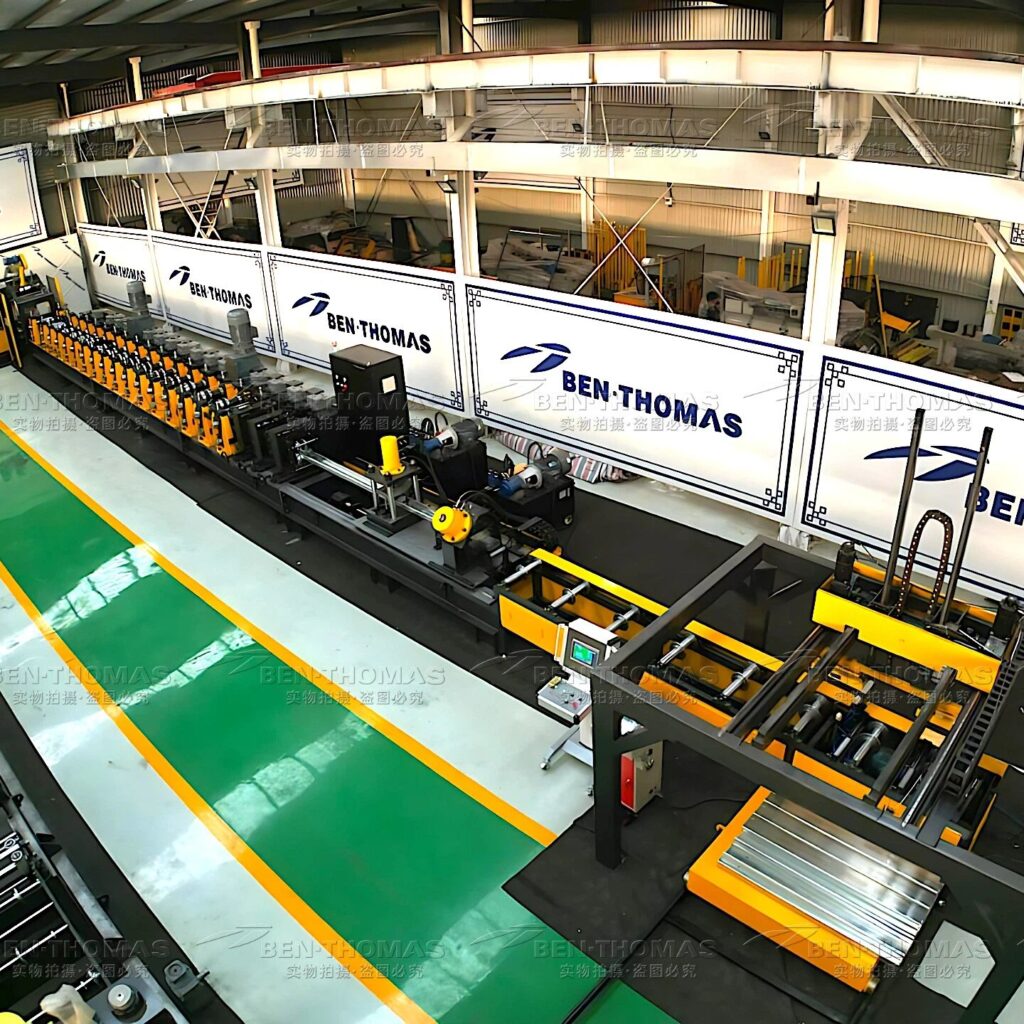
The solar energy industry demands precision, durability, and speed. As utility-scale solar farms expand globally, the demand for high-quality mounting structures has never been higher. At the heart of this manufacturing process lies the C U Omega Roll Production Line for the solar structure industry. Unlike standard roll formers, machines designed for the solar sector require specialized features to handle the unique demands of C-shaped support beams used in ground-mounted and rooftop arrays.
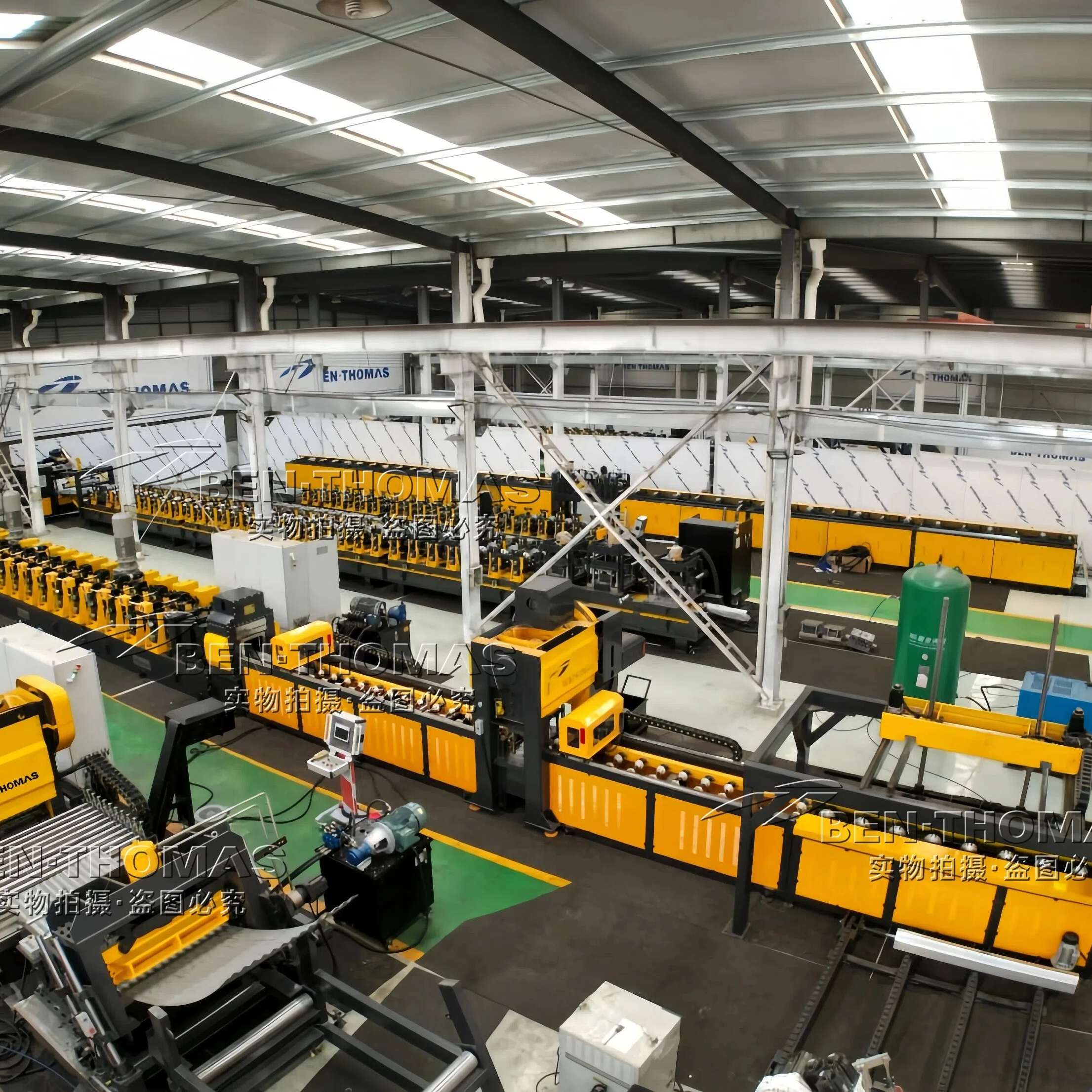
A modern, high-performance machine is not just a bending unit; it is a complete production line. Let’s break down the critical components that define a top-tier solar structure roll former and why they matter for your bottom line.
1. Heavy-Duty Decoiling (10T Capacity)
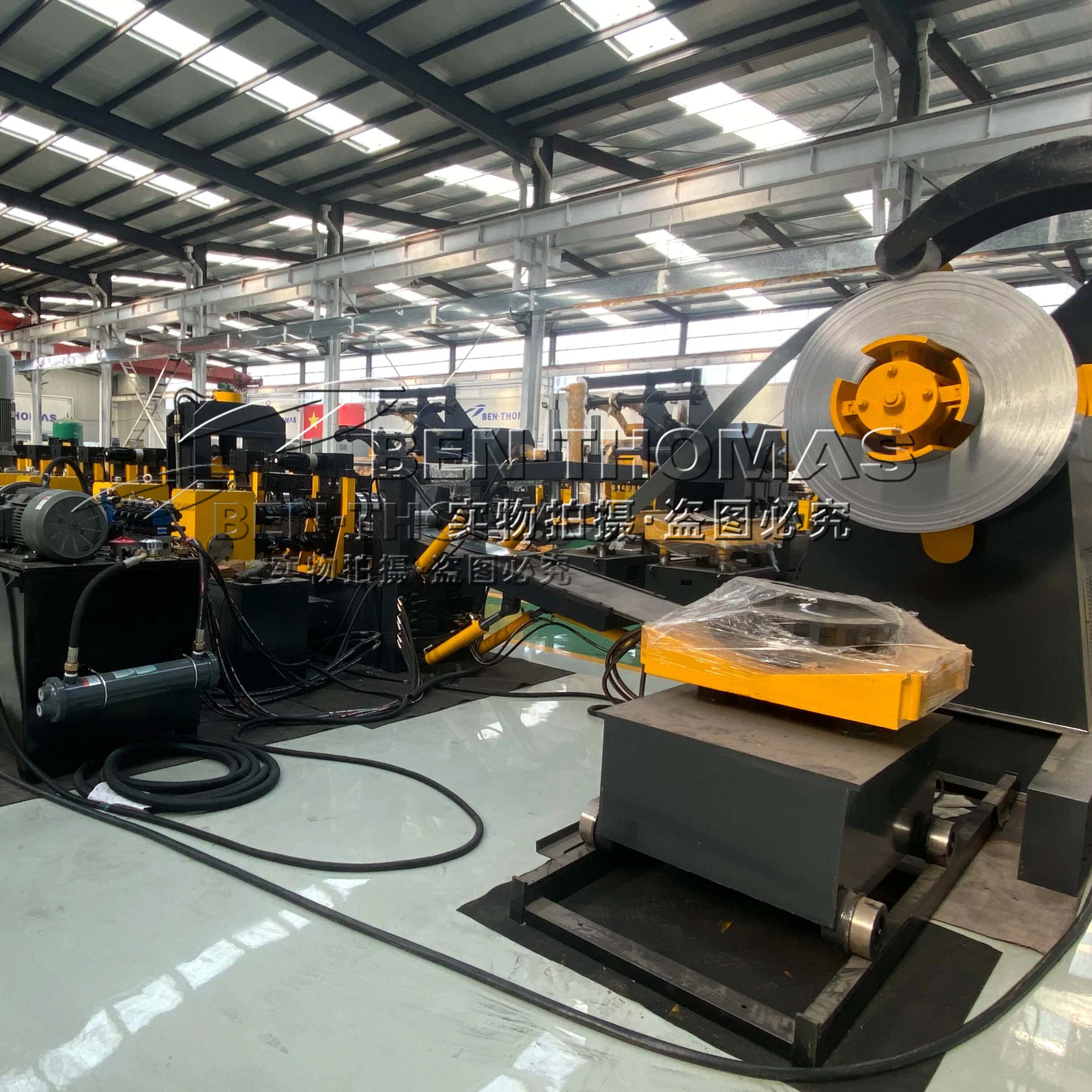
Efficiency starts at the uncoiling stage. A 10t decoiler is the industry standard for solar projects, which typically use high-strength, low-alloy steel. This capacity allows for extended production runs without constant material changes, reducing downtime. The decoiler ensures that the heavy steel coils are fed into the line with consistent tension, preventing warping or misalignment during the roll forming process.
2. The Debate: Pre-Punching vs. Post Punch
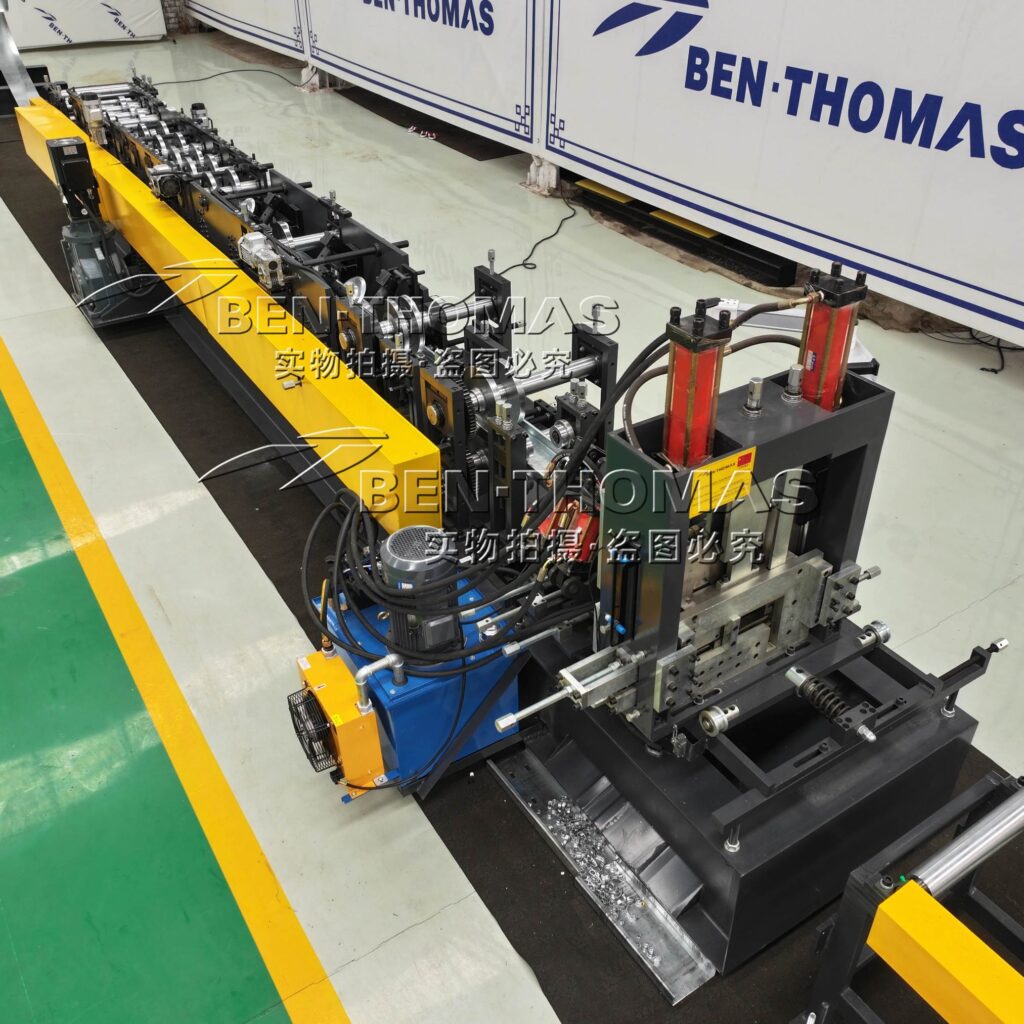
One of the most critical decisions in solar structure manufacturing is the punching method. Our machine offers flexibility for both pre-punching or post punch configurations.
-
Pre-Punching: This method punches the holes in the flat strip before the material enters the roll former. It is the preferred method for solar applications because it maintains the structural integrity of the final profile. Since the metal is still flat, punching is faster, cleaner, and allows for precise hole patterns required for bolting solar modules and mounting hardware.
-
Post Punching: Alternatively, punching after the profile is formed offers benefits for dynamic hole patterns. It allows for last-minute adjustments in hole placement, which is useful for custom solar projects where racking specifications vary by site.
3. The Roll Forming Station
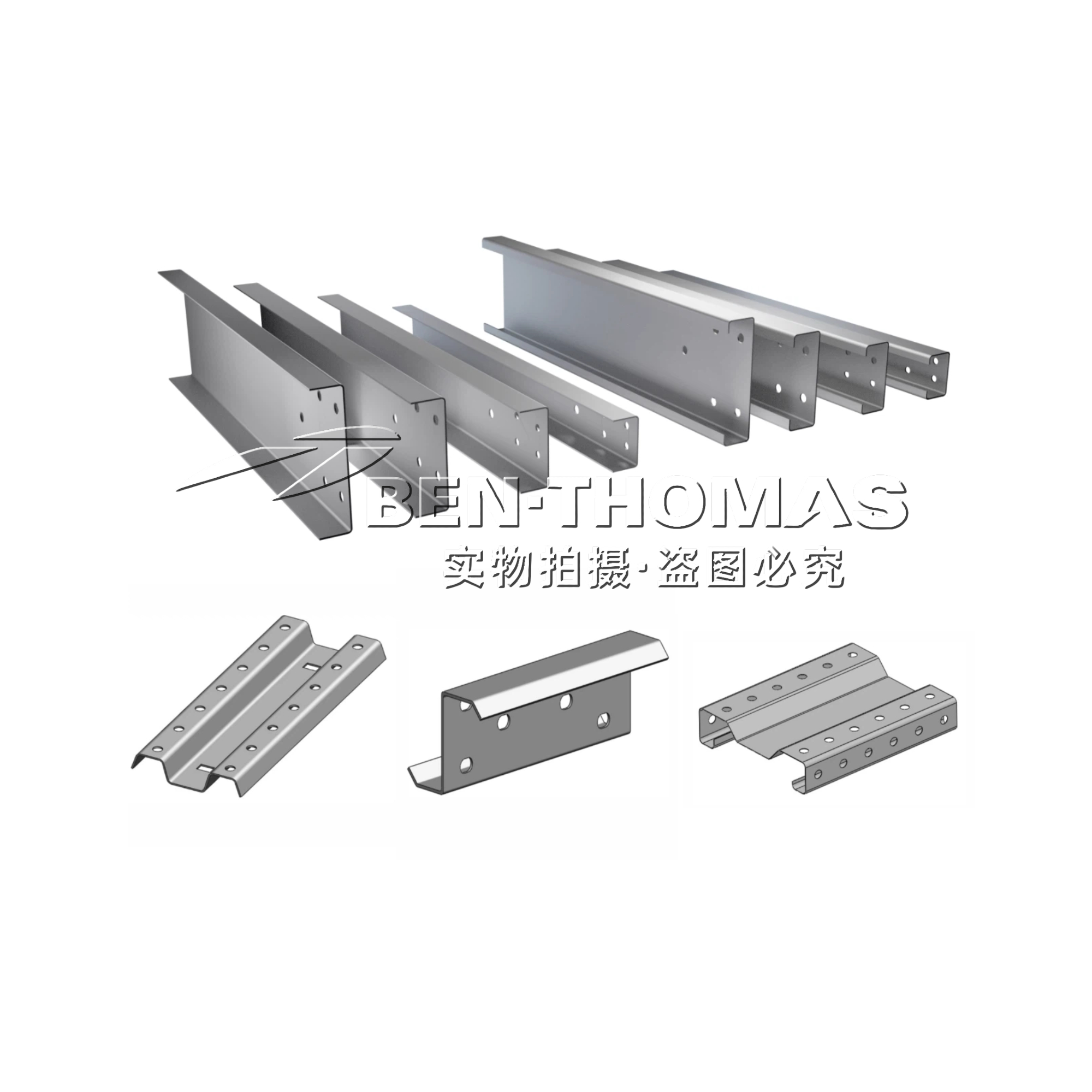
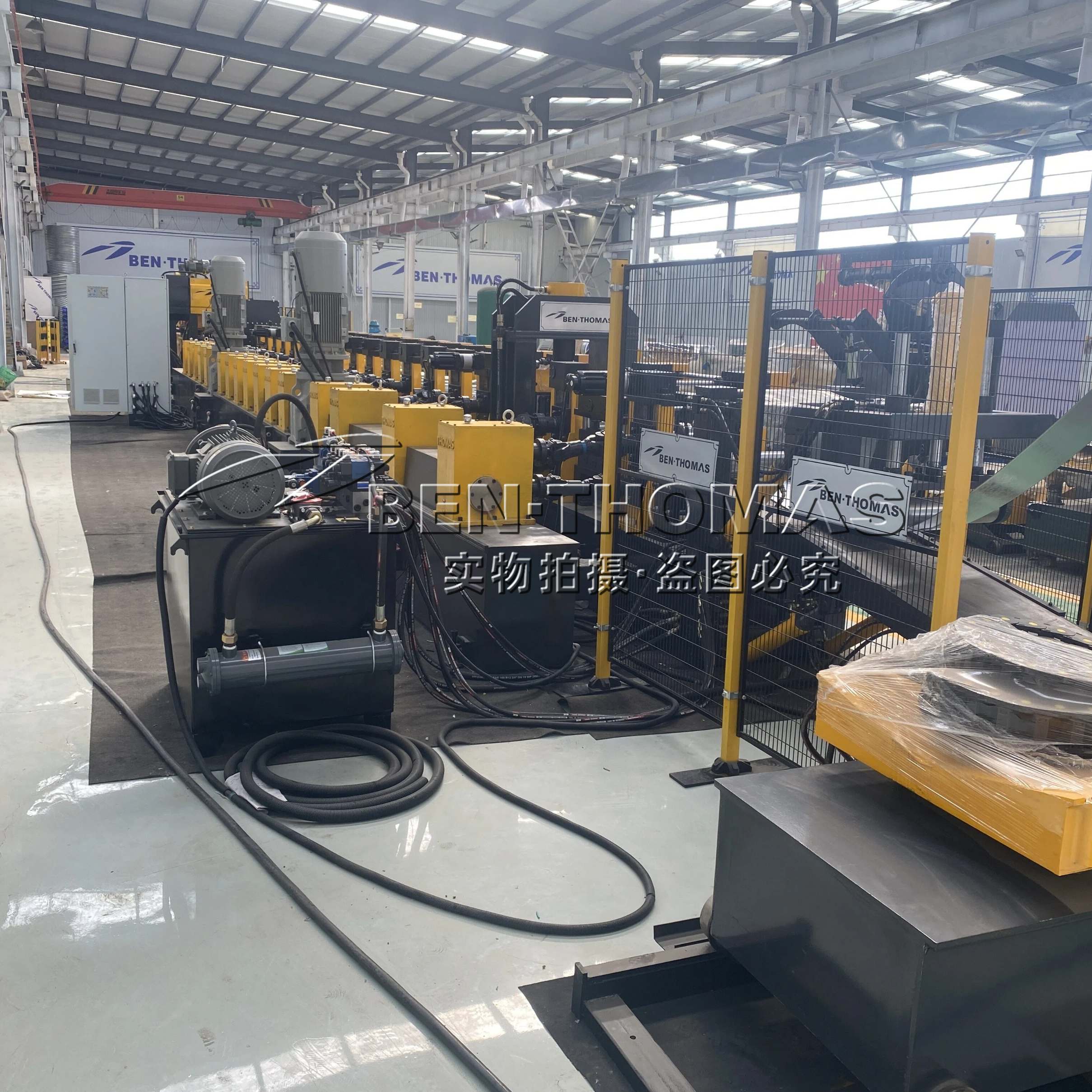
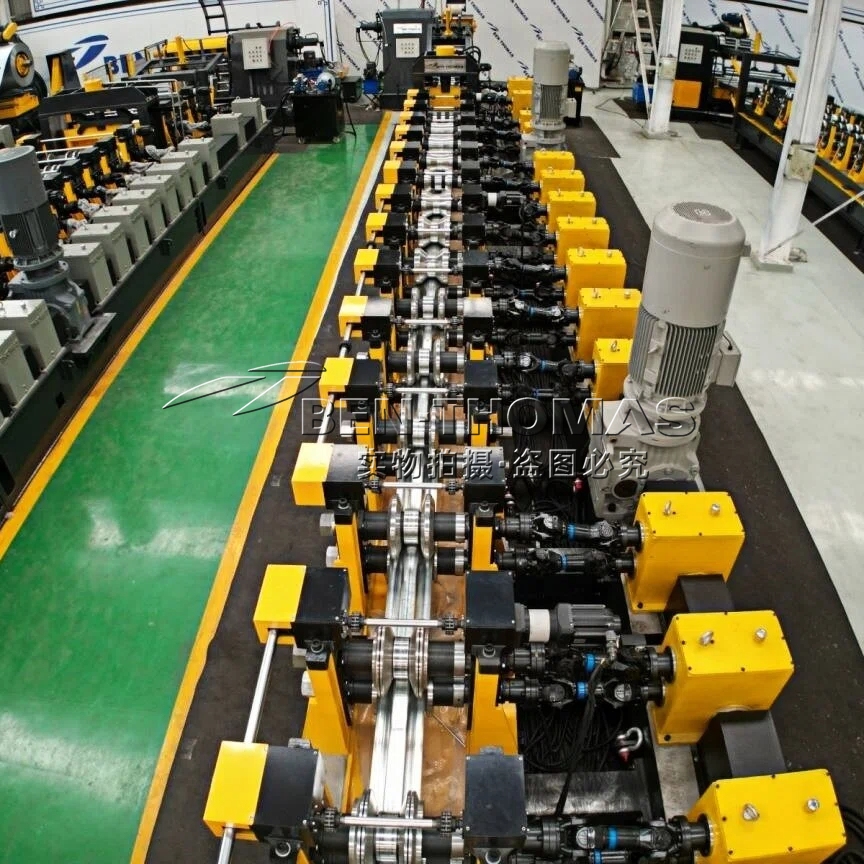
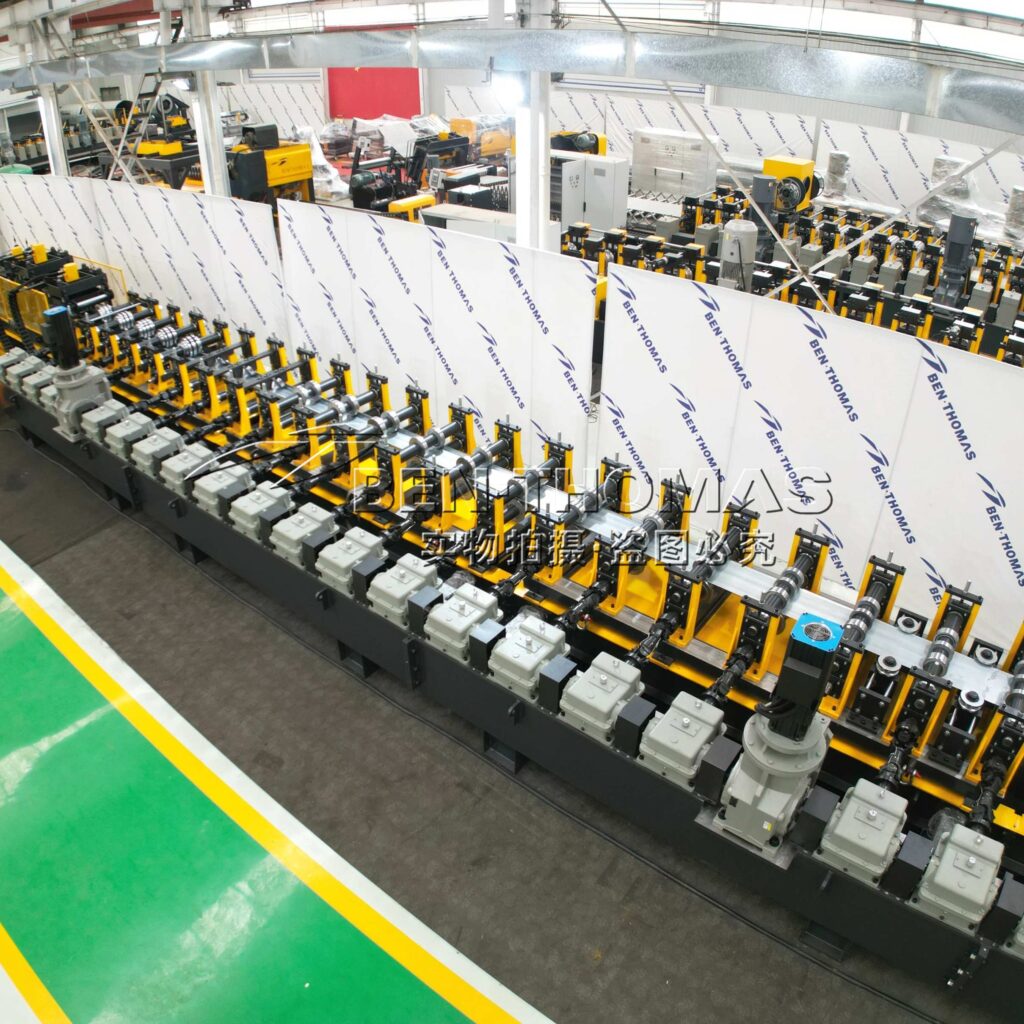
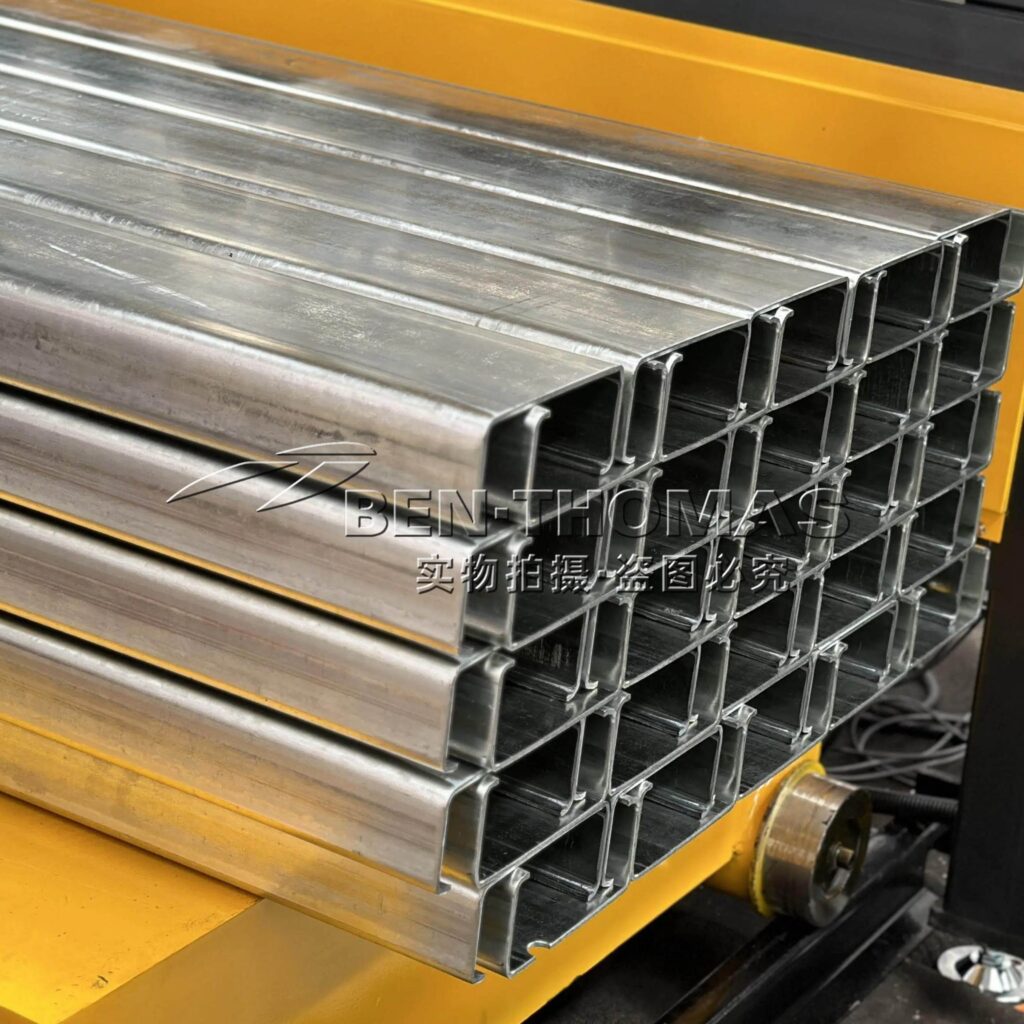
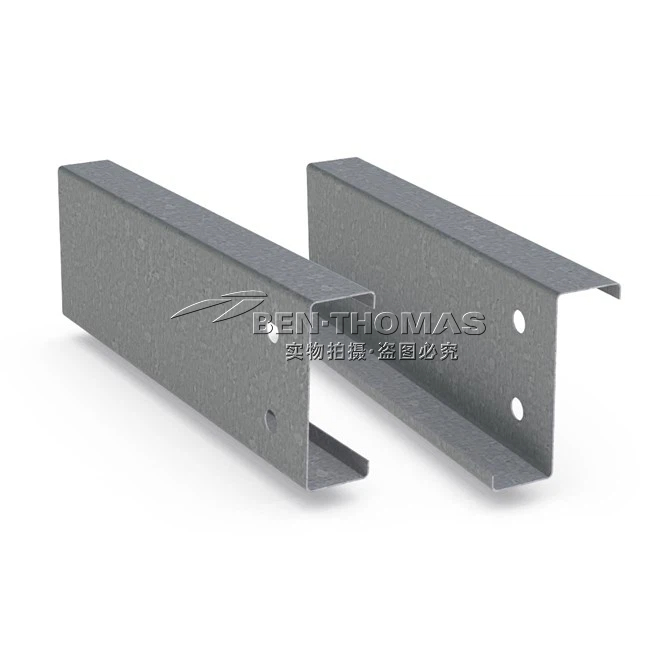
The core of the machine is the Automatic C U Omega Purlin Roll Forming lines. Designed specifically for the solar industry, the roller stations are calibrated to handle high-tensile steel (often 450–600 MPa) without damaging the galvanized coating. The forming process transforms the flat strip into a precise C profile, which acts as the primary beam for solar panel rows. The accuracy of the roller dies ensures that the profile remains straight over long spans—a crucial requirement for solar trackers.
4. Precision Cutting and Stacking
Once the profile is formed and punched, the hydraulic cutting system activates. Hydraulic cutting is preferred over mechanical shearing for solar structures because it provides a clean, burr-free cut, reducing the risk of injury during installation and ensuring a flush fit at the connection points.
Finally, the automatic stacker system ensures that finished purlins are collected and organized without manual labor. This system counts, stacks, and sometimes even ties the bundles, preparing them for immediate shipment to the solar farm site.
Why PLC Control is Non-Negotiable
All of these components are synchronized through a sophisticated PLC controller (Programmable Logic Controller). In the context of solar manufacturing, a PLC is essential for:
-
Recipe Management: Storing hundreds of different hole patterns and profile lengths for various solar module brands.
-
Consistency: Ensuring that the 100th purlin is identical to the 1st, which is vital when assembling large-scale arrays where even a 1mm deviation can cause misalignment.
-
Remote Diagnostics: Allowing manufacturers to minimize downtime with quick troubleshooting.
Conclusion
Investing in a dedicated C profile roll former with integrated punching and automatic stacking is the key to scaling solar structure manufacturing. By combining a 10t decoiler, flexible punching options, and robust PLC control, manufacturers can achieve the throughput required to win large solar tenders while maintaining the tight tolerances the industry demands.
Contact: Elise
Tel:+86-155 3281 7581
Email: elise@tgrfm.cn