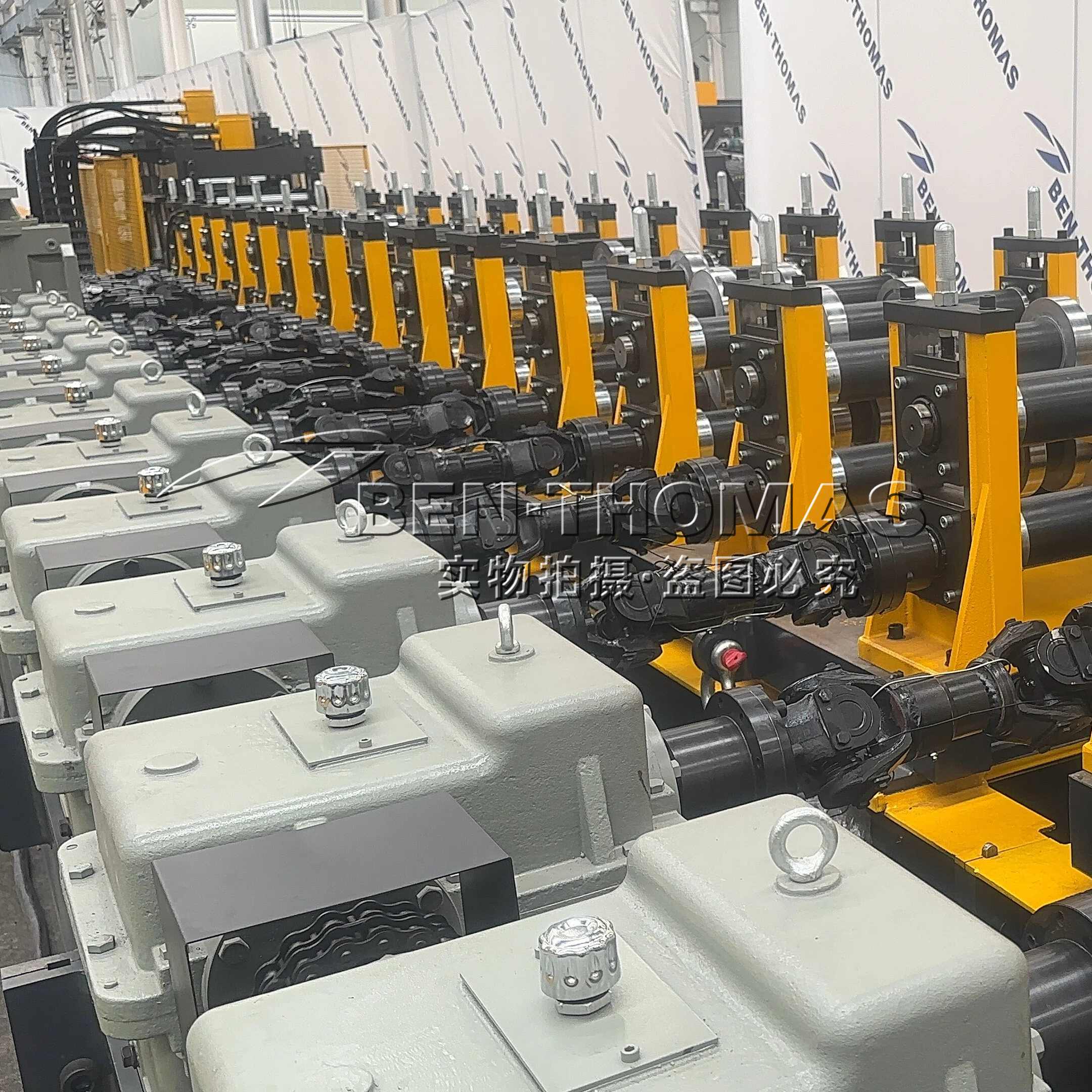
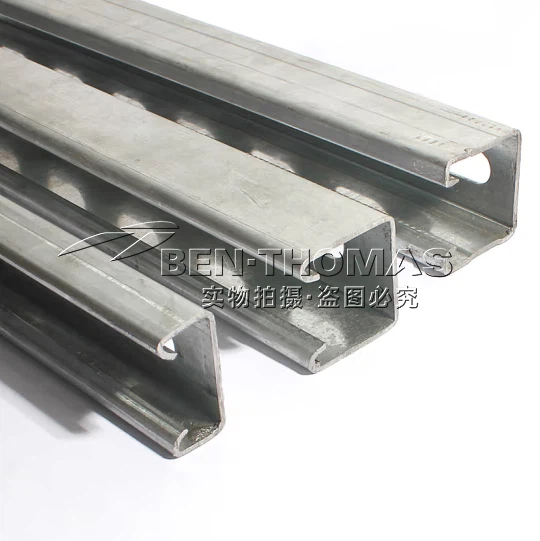
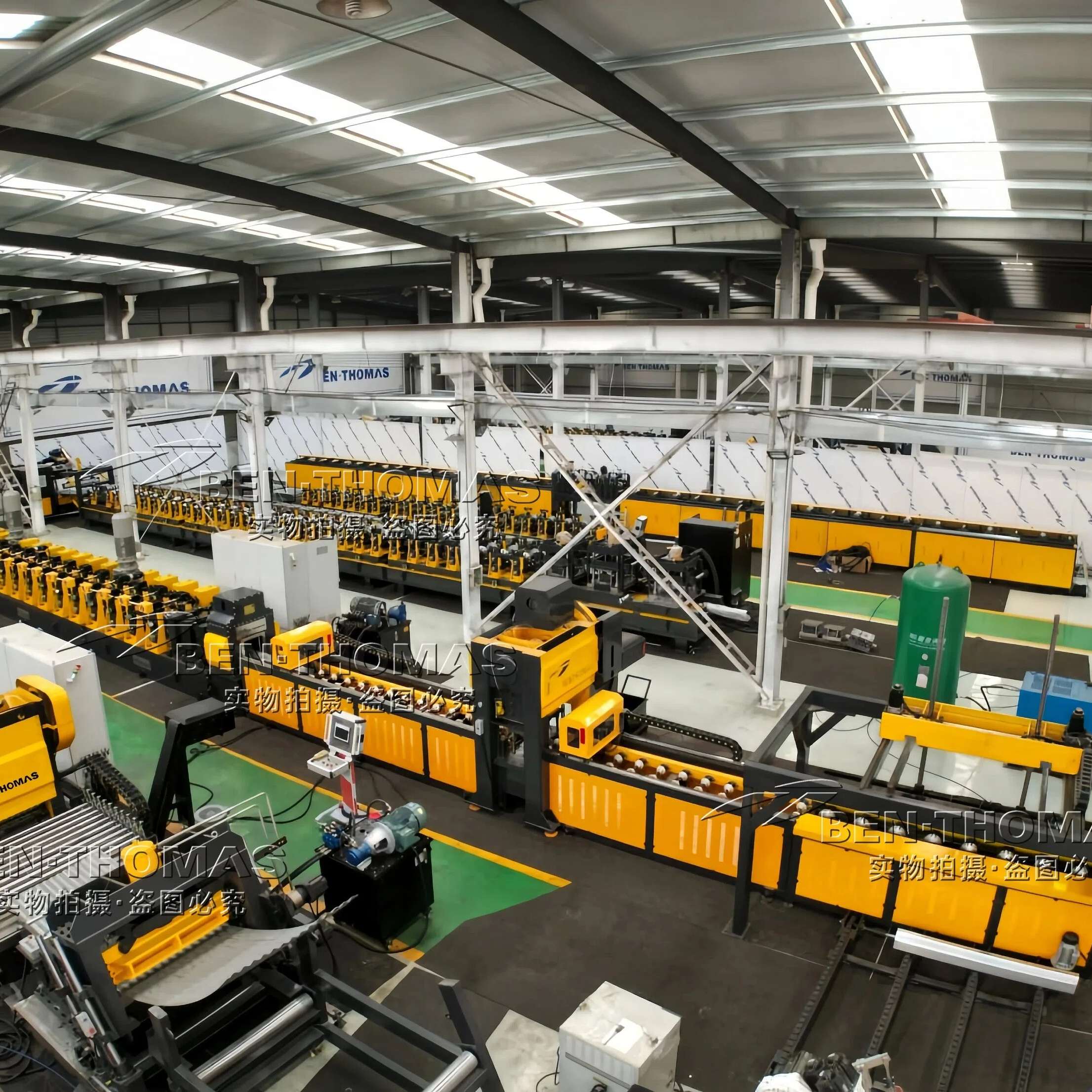
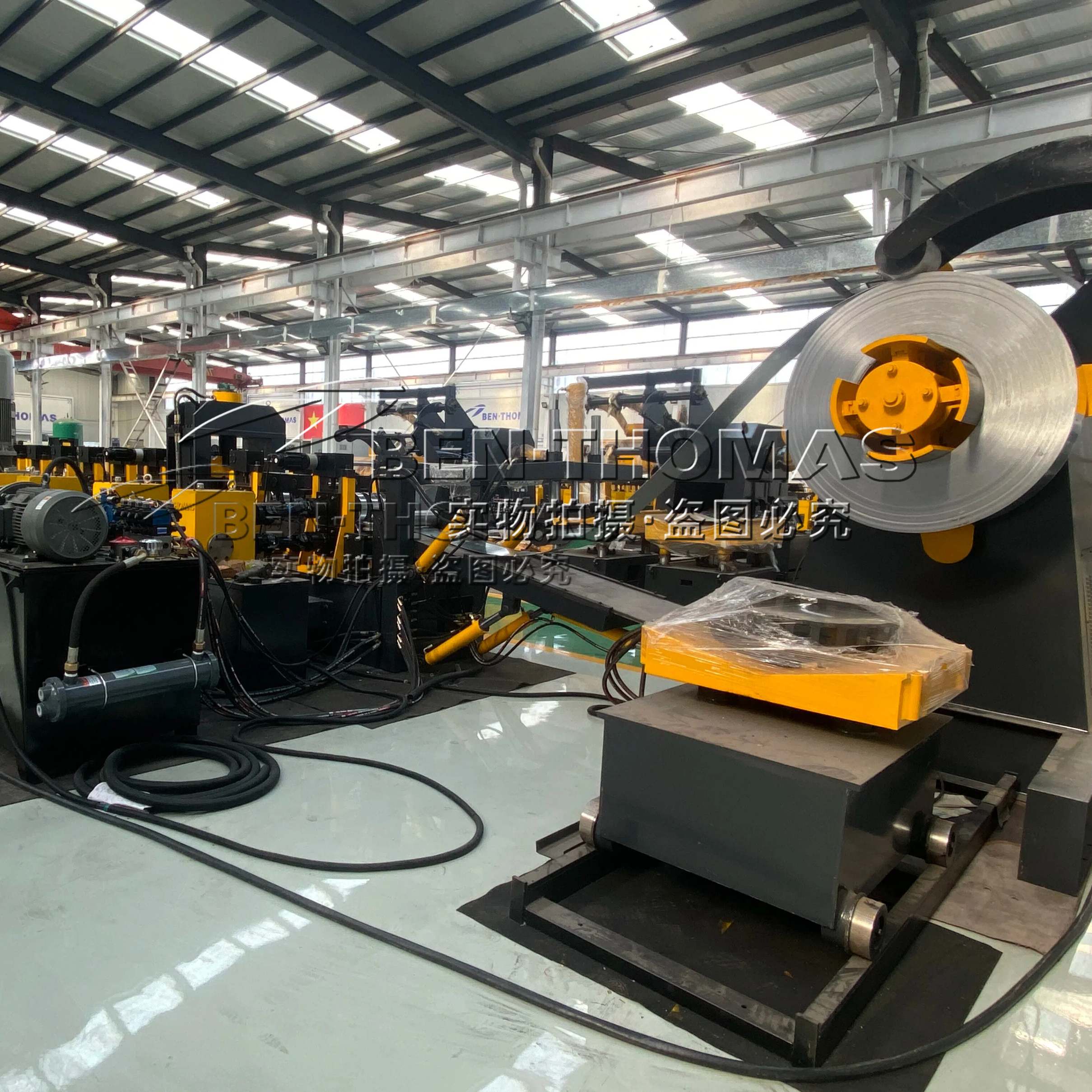
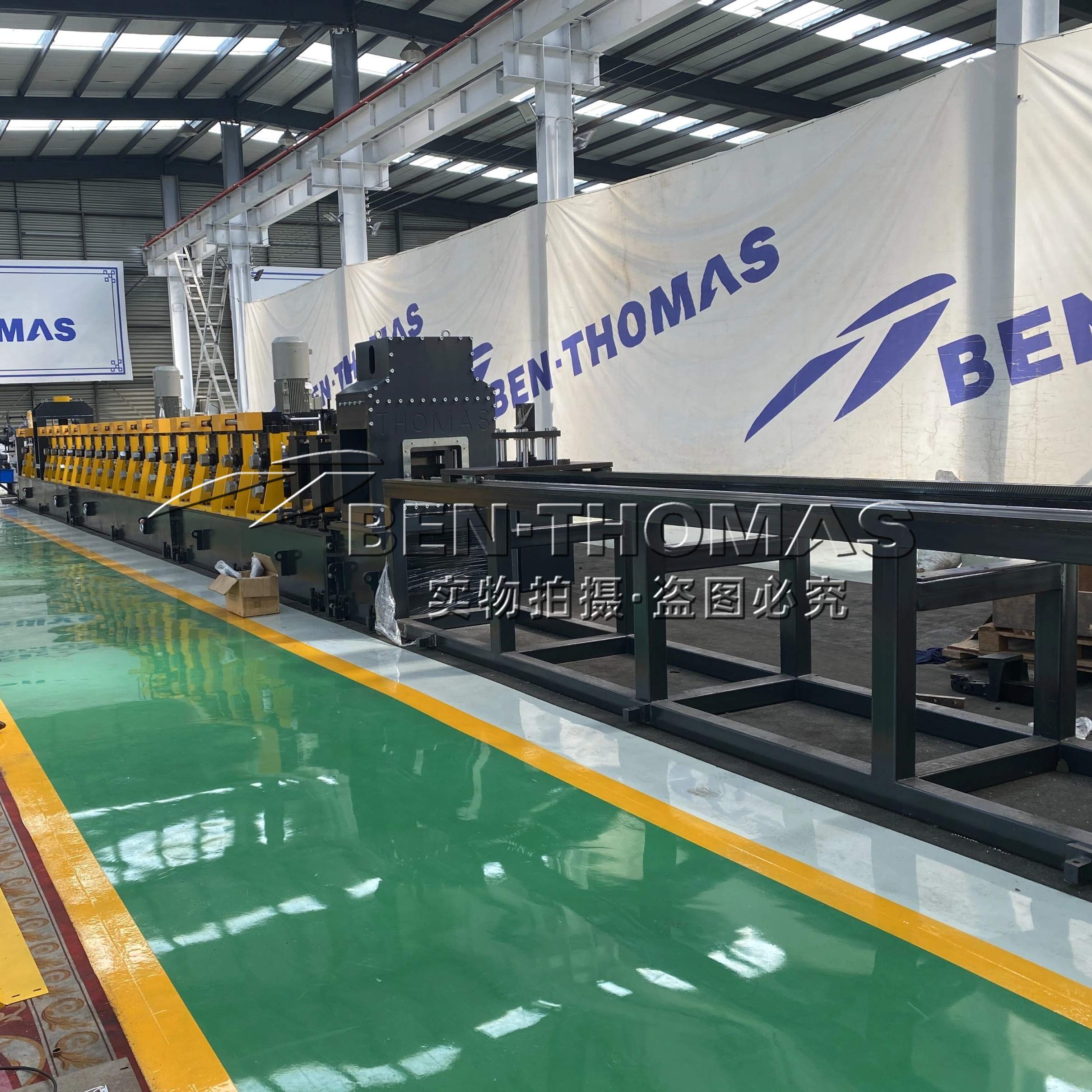
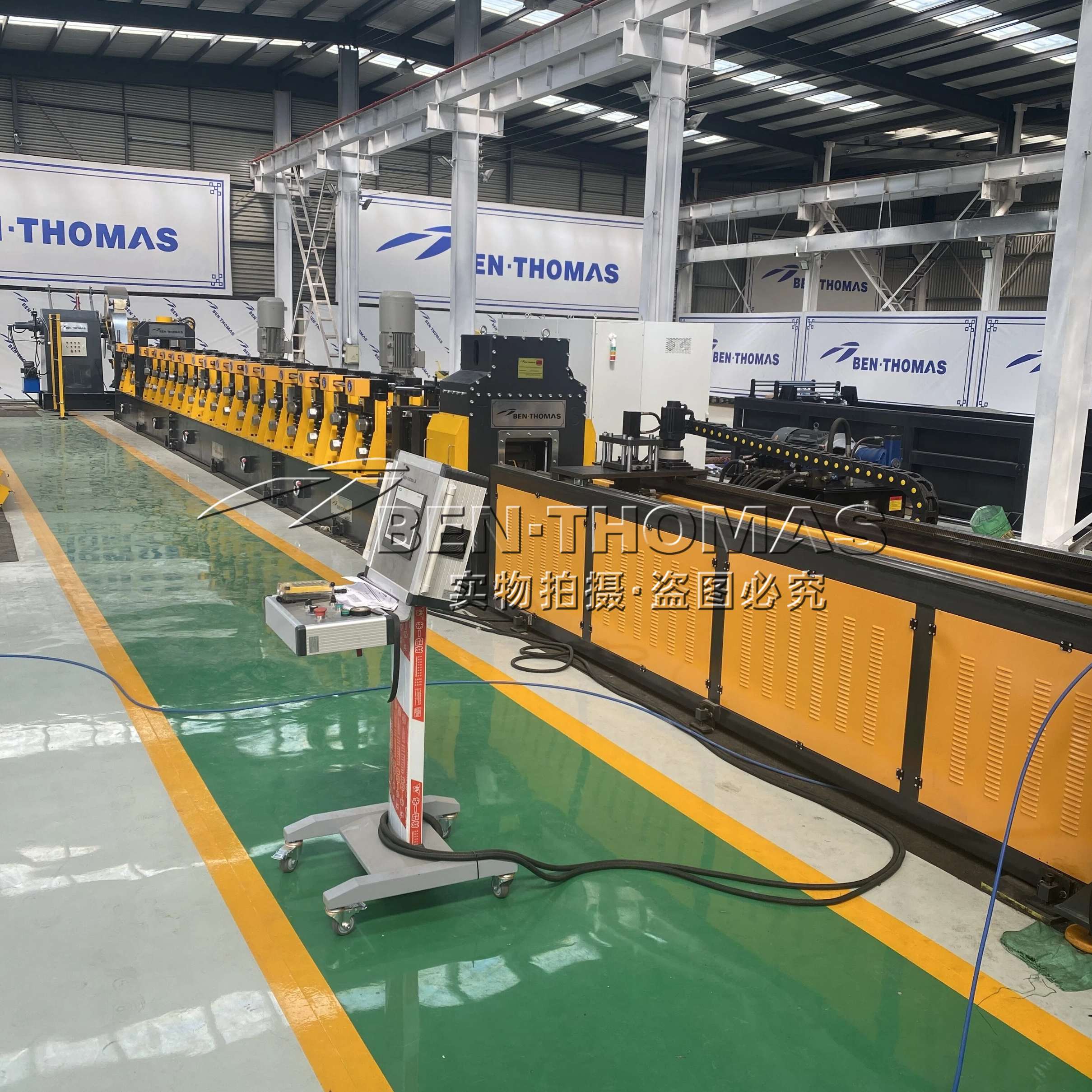
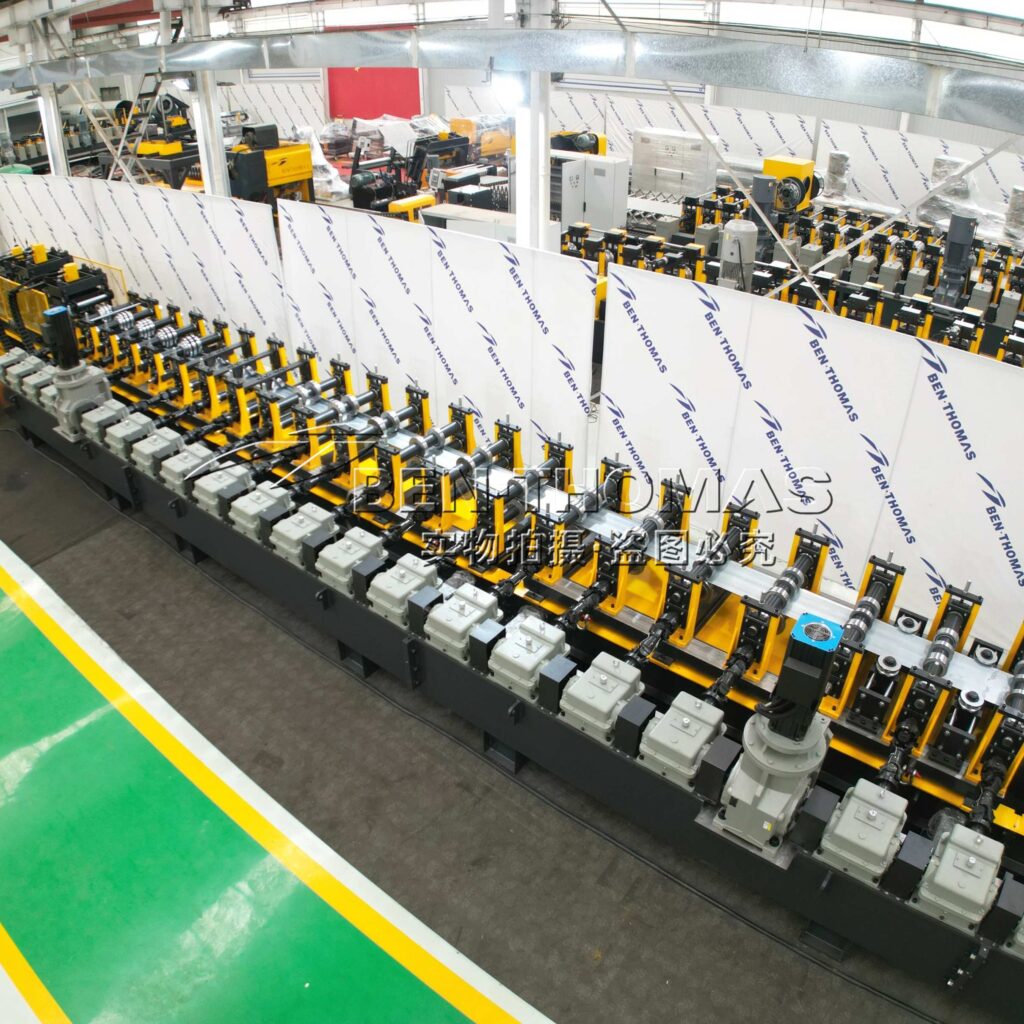
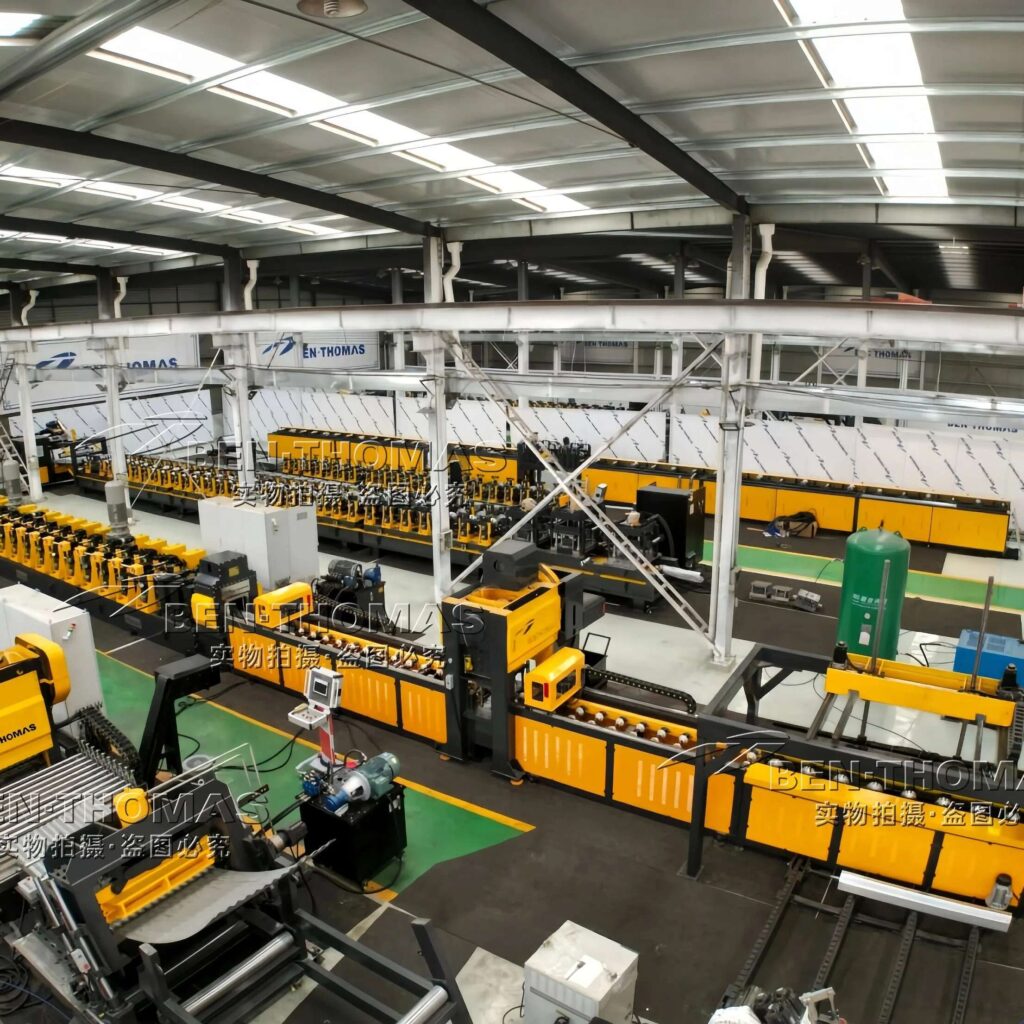
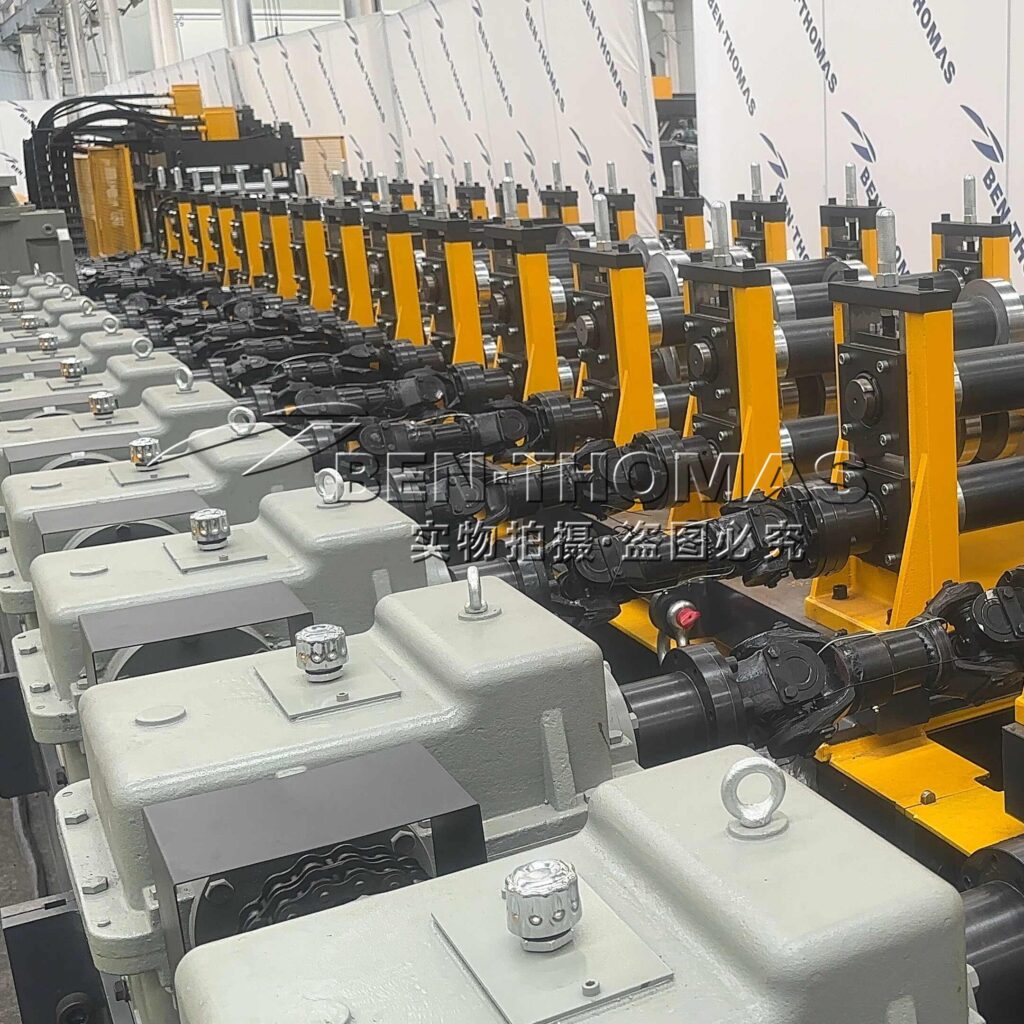
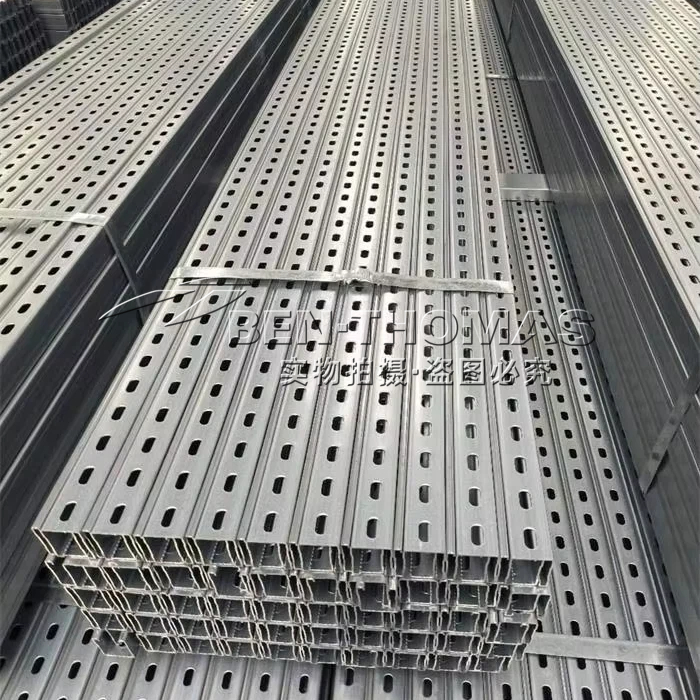
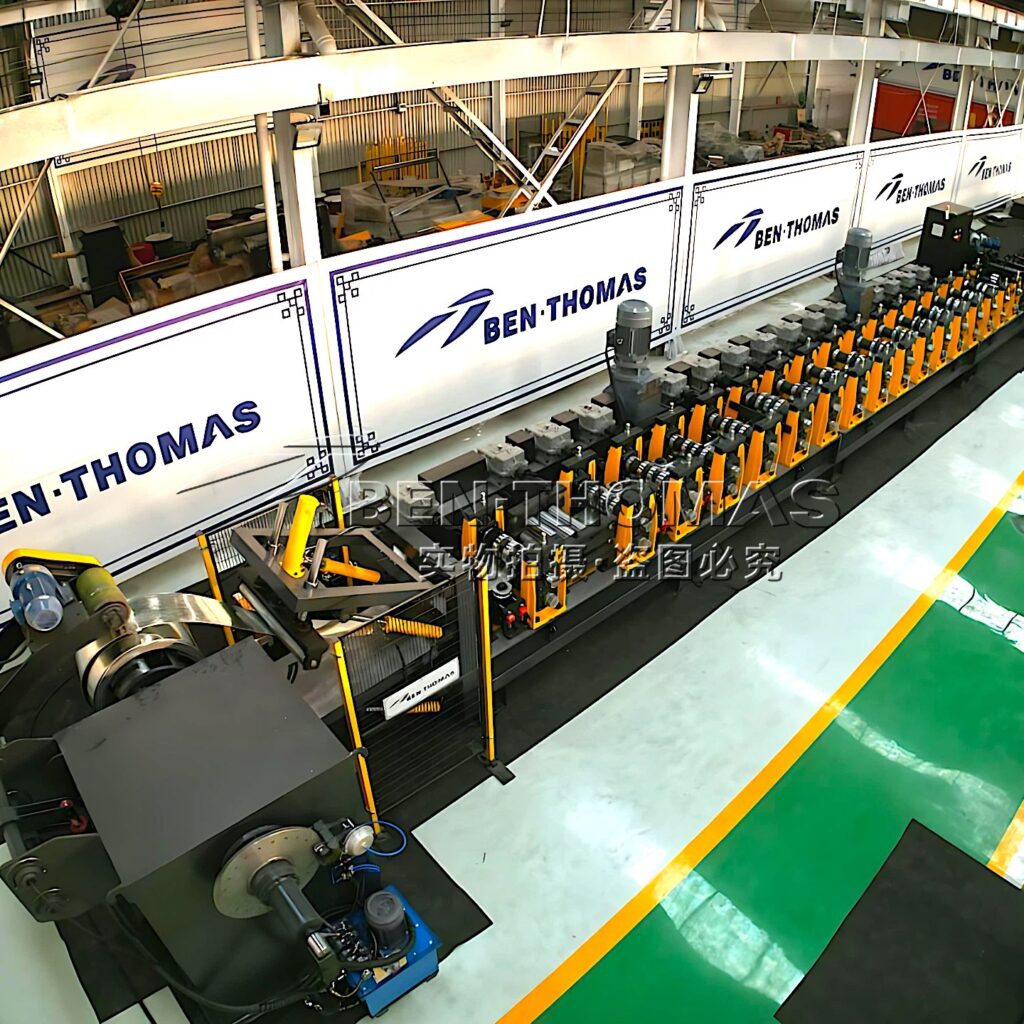
The rapid growth of the solar industry has created unprecedented demand for mounting structures—and with it, the need for manufacturing solutions that combine high throughput with exceptional flexibility. The Unistrut Slotted Channel Roll Forming Line has evolved into a highly automated production cell, integrating mechanical precision with intelligent controls. This article examines the automation technologies that define today’s advanced lines.
PLC Integration: Centralized Control
At the core of any modern roll forming line is a Programmable Logic Controller (PLC) —typically from leading brands such as Siemens, Mitsubishi, Allen-Bradley, or Beckhoff. The PLC serves as the central nervous system, managing:
-
Synchronization: Coordinates the speed of the uncoiler, punching unit, roll former, and cut-off press to ensure seamless continuous operation. Precise synchronization is critical for “fly punching” and “fly cutting” operations.
-
Recipe Management: Stores hundreds of production recipes, each containing parameters for profile type, material thickness, hole patterns, cut lengths, and production quantities. Changeovers that once required hours of manual adjustment can now be completed in minutes.
-
Real-Time Diagnostics: Continuously monitors sensors throughout the line. If a deviation occurs—such as material misalignment, tooling wear, or motor overload—the PLC can trigger alarms, display troubleshooting guidance, or automatically stop the line to prevent waste.
-
Production Data Logging: Records production counts, uptime, scrap rates, and other key performance indicators (KPIs) for continuous improvement analysis.
HMI: Intuitive Operator Interface
The Human-Machine Interface (HMI) —typically a color touchscreen panel (10–15 inches)—provides operators with comprehensive control and visibility:
With an intuitive HMI, a single operator can manage the entire production line, reducing labor costs and minimizing the risk of operator-induced errors.
Servo-Driven Systems for Precision & Flexibility
Advanced lines increasingly replace hydraulic systems with servo-driven motors for critical operations:
-
Servo Punching: Allows the punching unit to execute complex hole patterns with positioning accuracy of ±0.3mm. Servo systems enable “fly punching,” where the die moves with the strip to maintain continuous production. Multiple servo punches can operate simultaneously to create different hole sizes and patterns in a single pass.
-
Servo Feed & Cut-Off: Servo-driven feed rollers precisely control strip advancement, while a servo-controlled flying cut-off ensures consistent cut lengths regardless of line speed fluctuations.
-
Servo Roller Adjustment: Some lines feature servo-controlled roller spacing adjustments, allowing rapid changeovers between different material thicknesses or profile depths without manual tooling changes.
Automatic Stacking & Packaging Integration
The automatic stacker represents the final stage of automation, transforming a production line into a complete manufacturing cell:
-
In-line stacking: Finished profiles are automatically transferred to a stacking station
-
Counting & bundling: Optical sensors count pieces; bundles are formed according to customer specifications
-
Layer protection: Optional cardboard or plastic sheet placers prevent surface damage during stacking
-
Palletizing integration: Some systems directly feed to automatic palletizers or stretch-wrapping stations
Industry 4.0 & Remote Connectivity
Modern solar PV roll forming lines increasingly incorporate IoT (Internet of Things) capabilities:
-
Remote monitoring: Production status, machine health, and performance metrics accessible from any internet-connected device
-
Predictive maintenance: Vibration analysis, temperature monitoring, and current draw tracking enable maintenance before failures occur
-
Cloud data logging: Production data aggregated across multiple lines for enterprise-wide analysis
-
Over-the-air updates: Control software updates delivered remotely, minimizing downtime
Benefits of Advanced Automation
For manufacturers supplying the solar industry, investing in an automated solar PV mounting structure roll forming line translates to higher throughput, superior quality, and the flexibility to serve a rapidly evolving market.
Contact: Elise
Tel:+86-155 3281 7581
Email: elise@tgrfm.cn